



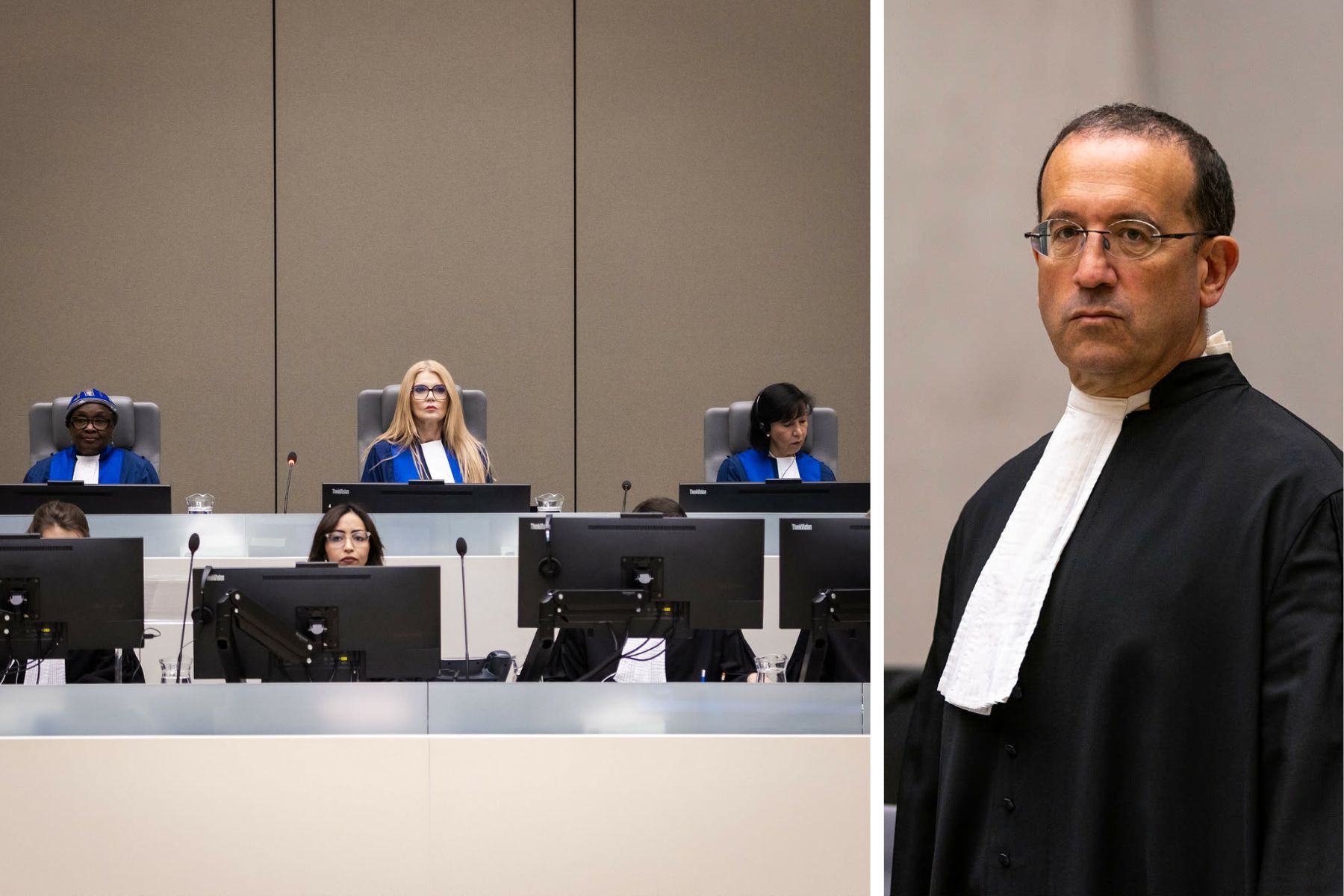
Duterte appeals ICC decision against full trial
Cover photo: IIC-CPI
THE HAGUE, Netherlands — The Defence for former Philippine president Rodrigo Duterte has sought permission to appeal the International Criminal Court (ICC) Pre‑Trial Chamber I’s April 23, 2026 decision confirming charges against him.
On April 23, 2026, the Pre-Trial Chamber I unanimously confirmed all the charges of three counts of crimes against humanity brought by the Prosecutor against Rodrigo Roa Duterte and committed him to trial before a Trial Chamber.
Pre-Trial Chamber I concluded that there are substantial grounds to believe that Duterte is responsible for the crimes against humanity of murder and attempted murder, pursuant to article 7(1)(a) of the Rome Statute (ICC’s founding treaty). These crimes were allegedly committed as part of a widespread and systematic attack against a civilian population in the Philippines between November 1, 2011 and March 16, 2019 in the context of the “war on drugs” campaign, when Duterte was mayor of Davao and later president of the country.
In an 18-page appeal brief, lead defense counsel Nicholas Kaufman argues that the Chamber committed two legal errors that undermine the fairness and clarity of the proceedings. According to the filing, these errors affect Duterte’s right to understand the case against him and require immediate intervention by the Appeals Chamber to prevent further procedural harm.
Excessively flexible approach
First, the defence claims the Chamber adopted an excessively “flexible” approach to defining the charges. By allowing broad descriptions of incidents, victims, and locations—such as stating details like “timing, location, and identity of the victims.” According to the filing, the Chamber allegedly failed to set clear factual boundaries for the case. The Defence further argues that this approach leaves the scope of the charges open‑ended, making it impossible for Duterte to know exactly what incidents he is being accused of, especially since the charges cover more than seven years and the entire Philippines. They say the law requires clear, detailed charges — not broad descriptions that can change later.
“As such, the Pre-Trial Chamber effectively endorsed an open-ended formulation of the charges, permitting their factual scope to remain undefined and thereby failing to delineate the parameters of the case at the confirmation stage, as required by both practice and procedure,” the brief states.
Second, the Defence argues that the Chamber did not provide a reasoned evidentiary basis for confirming the charges. The Defence contends that this lack of evidentiary explanation prevents meaningful scrutiny and fails to address central Defence arguments, “including the absence of a common plan.”
“Instead, it accepted the Prosecution’s case at face value,” the Defence argues.
The common referred to the systematic and widespread attack on civilian population through the war on drugs. According to the ICC Prosecution, Duterte and other senior officials allegedly carried out a planned, organized system of killings during the “war on drugs.” Prosecutors described it as a state‑sanctioned policy designed to “neutralise” drug suspects — a term they argue meant killing them.
Lastly, the Defence says that these mistakes make the case unfair and slow things down. They argue that the judges’ decision doesn’t clearly explain what the trial will actually focus on, which could cause confusion and more legal fights later. Because of this, they want permission to appeal now, so a higher court can fix the problems before the case moves forward.
Pre-Trial Chamber I based its decision on the evidence and arguments presented by the Prosecutor and the Defence during the confirmation of charges hearing from February 23 to 27 February 2026, as well as on the submissions and documents of the parties and participants, including participating victims.
Constitution of Trial Chamber
On April 24, 2026, the Presidency of the International Criminal Court (ICC) constituted Trial Chamber III, which will be in charge of the case of The Prosecutor v. Rodrigo Roa Duterte. Trial Chamber III is composed of Presiding Judge Joanna Korner, Judge Keebong Paek and Judge Nicolas Guillou.
Trial Chamber III will be in charge of the conduct of the trial in this case. The Chamber will hold status conferences, confer with the parties and participants in order to set the date of the trial and adopt the procedures necessary to facilitate the fair and expeditious conduct of the proceedings. The first status is scheduled on May 27.
Jurisdiction
On April 22, 2026, the ICC Appeals Chamber decided that the ICC has jurisdiction over the alleged crimes against humanity cases committed by Duterte as co-perpetrator. The cases were allegedly committed at the time when the Philippines was a state-party to the Rome Statute. The Philippines withdrew as a member of the ICC on March 17, 2019. The crimes were allegedly committed between November 1, 2011 and March 16, 2019.
