



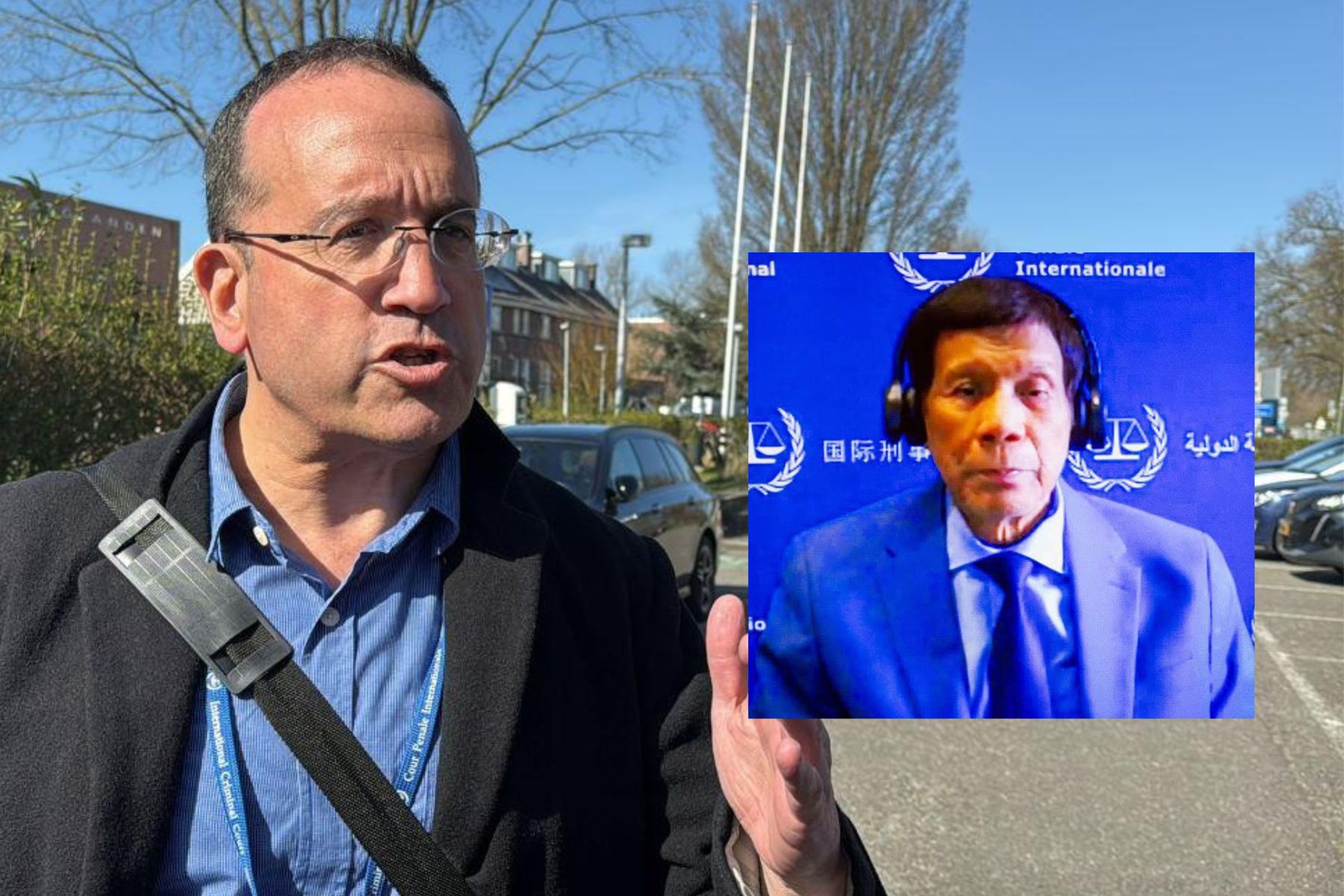
Duterte Defence Cites 'Extreme Frailty' In Urgent Bid To End ICC Detention
THE HAGUE, Netherlands—In an eight-page "urgent" filing submitted on 19 December 2025, lead defence counsel Nicholas Kaufman has called on the International Criminal Court (ICC) to order a new, specific medical report to determine if former President Rodrigo Duterte is physically capable of being a "flight risk."
The petition argues that Duterte’s deteriorating health has rendered the legal grounds for his continued detention "obsolete."
Under Article 58(1)(b) of the Rome Statute, the ICC justifies detention based on three risks: that a suspect might flee, obstruct the investigation, or continue committing crimes. Kaufman’s petition contends that Duterte’s current state makes these risks physically impossible to "actualise."
Physical Decline: The defence points to "unexplained weight loss" and a "total loss of appetite," stating that the 80-year-old former president now requires constant daily assistance.
Cognitive Limitations: While the prosecution focused on Duterte’s "underperformance" in tests, Kaufman argues that even the court's experts agree the former president is "frail and elderly" with "impacted" short-term memory.
Incapability to Flee: Kaufman asserts that his client's infirmity is "visible proof" that he is incapable of fleeing or intimidating witnesses, making his nine-month detention at the United Nations Detention Unit (UNDU) unnecessary.
The petition asks the Pre-Trial Chamber to mandate the existing medical panel to issue a focused report answering one specific question: Does Duterte's current cognitive and physical state permit him to flee or obstruct justice?
Kaufman argues that the previous medical reports focused only on "fitness to stand trial" and did not properly address how his physical decline affects the necessity of his detention.
A significant portion of the filing criticises the court for repeatedly denying requests for a "status conference." Kaufman argues that if the judges were to see Duterte in person, the "absolute incongruity" of the prosecution's claims would be evident.
"The Chamber must revert to the ruling on detention to determine whether there has been a change in the circumstances," the motion reads, insisting that a formal oral hearing is now legally required under Rule 118(3) of the Court's Rules of Procedure and Evidence.
The ICC is expected to issue a ruling by early January 2026. The Chamber must decide whether to grant this new medical assessment and whether to schedule the long-delayed "confirmation of charges" hearing for February 2026. Until then, the former president remains in custody in The Hague.
Meanwhile, the ICC prosecutors have formally accused Duterte of deliberately underperforming in medical assessments to avoid standing trial for alleged crimes against humanity.
In a legal submission dated 19 December 2025, the Office of the Prosecutor (OTP) challenged the former leader’s claims of mental and physical incapacity, citing evidence from a panel of independent medical experts.
The prosecution’s filing is based on evaluations conducted by three court-appointed experts. According to the document, while the 80-year-old former president is physically frail, the medical consensus is that he possesses the "necessary capacities" to understand the charges and participate in his defence.
The filing specifically highlights Duterte's performance in cognitive testing. Prosecutors noted that the former president failed "floor tests"—assessments so basic that even individuals with genuine, severe dementia are expected to pass. One such test mentioned was the "coin in hand" assessment, where a patient is asked to identify which hand holds a coin after a short delay.
"The Prosecution submits that the Accused is an unreliable historian of his own medical history," the filing stated, suggesting that the former president is "feigning cognitive impairments" to stall the legal process.
Responding to the accusations on the same day, Duterte’s legal counsel, Nicholas Kaufman, rejected the prosecution’s characterisation. The defence argued that the medical reports contain inconsistencies and that the former president’s health is in a state of genuine deterioration.
The defence has filed an urgent request for an evidentiary hearing. They are seeking to cross-examine the medical experts before the Pre-Trial Chamber makes a final ruling on whether the trial can proceed as scheduled in early 2026.
