



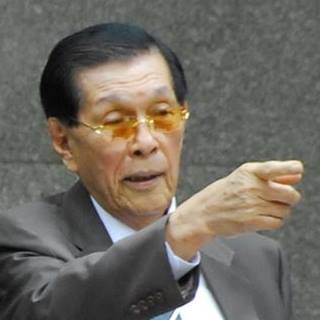
End Of An Era: Juan Ponce Enrile’s Death At 101 Elicits Starkly Polarized Reactions
MANILA—The passing of Juan Ponce Enrile on Thursday, 13 November 2025, at the age of 101, immediately ignited two sharply opposing narratives over his complex legacy.
President Ferdinand “Bongbong” Marcos Jr., whose administration appointed Enrile as Chief Presidential Legal Counsel in 2022, led the tributes, expressing profound personal and professional loss. The President focused his message on Enrile’s intellectual legacy, emphasizing his longevity and unmatched legal experience.
In an official statement, President Marcos Jr. framed Enrile’s service as a national treasure.
"He was more than just a legal counsel; he was a mentor, a repository of history, and a trusted friend whom I often fondly called 'Tito Johnny'," President Marcos Jr. stated. "His brilliance allowed me to rest easier at night, knowing his wisdom guided us. Secretary Enrile witnessed, and actively shaped, every major turning point in our nation's recent history. His dedication, spanning over 70 years, sets a standard for public service that is simply unmatched."
In stark contrast to the reverential tones from Malacañang, groups representing Martial Law survivors and human rights advocates issued condemnations, asserting that Enrile passed without facing justice for his role as the dictatorship’s chief implementor.
For the human rights community, Enrile’s death symbolizes a failure of accountability. As the Minister of National Defense and the official administrator of Martial Law from 1972 to 1981, he was directly responsible for the military and security apparatus that carried out widespread human rights abuses, including the documented cases of torture, enforced disappearances, and extrajudicial killings.
A spokesperson for the Campaign Against Historical Revisionism (CAHR), a prominent advocate group, stated their position unequivocally:
"His death is a harsh reminder that the architect of the Martial Law machinery has departed without facing a full legal reckoning for the torture, disappearances, and murders committed under his command. Justice delayed is justice denied," the spokesperson said. "While the current administration may honor him as a 'statesman,' we, the survivors, remember him as the administrator of state terror. We will not allow his passing to whitewash the historical truth."
The groups stressed that they would intensify their efforts to ensure that the historical record accurately reflects Enrile’s culpability during the period of martial rule, cautioning against any attempt to sanitize his legacy in the wake of his passing.
Enrile’s political life was defined by both his loyalty to the elder Marcos and his dramatic defection in 1986. That year, his withdrawal of support, alongside then-Armed Forces Vice Chief of Staff Fidel V. Ramos, served as the catalyst for the non-violent People Power Revolution that ultimately led to the ouster of President Ferdinand Marcos Sr.
Despite the split, his alliance with the younger Marcos in 2022 served as a final, powerful testament to the enduring and often complicated political ties that define Philippine elite politics.
Enrile's long career saw him serve four terms in the Senate, culminating in his role as the 21st Senate President. His life, and the disparate reactions to its end, illustrate the nation’s ongoing struggle to reconcile its past with its present leadership.
