



Filipino and Indonesian seafarers prepare class action vs Dutch govt, ship owners for unfair wages
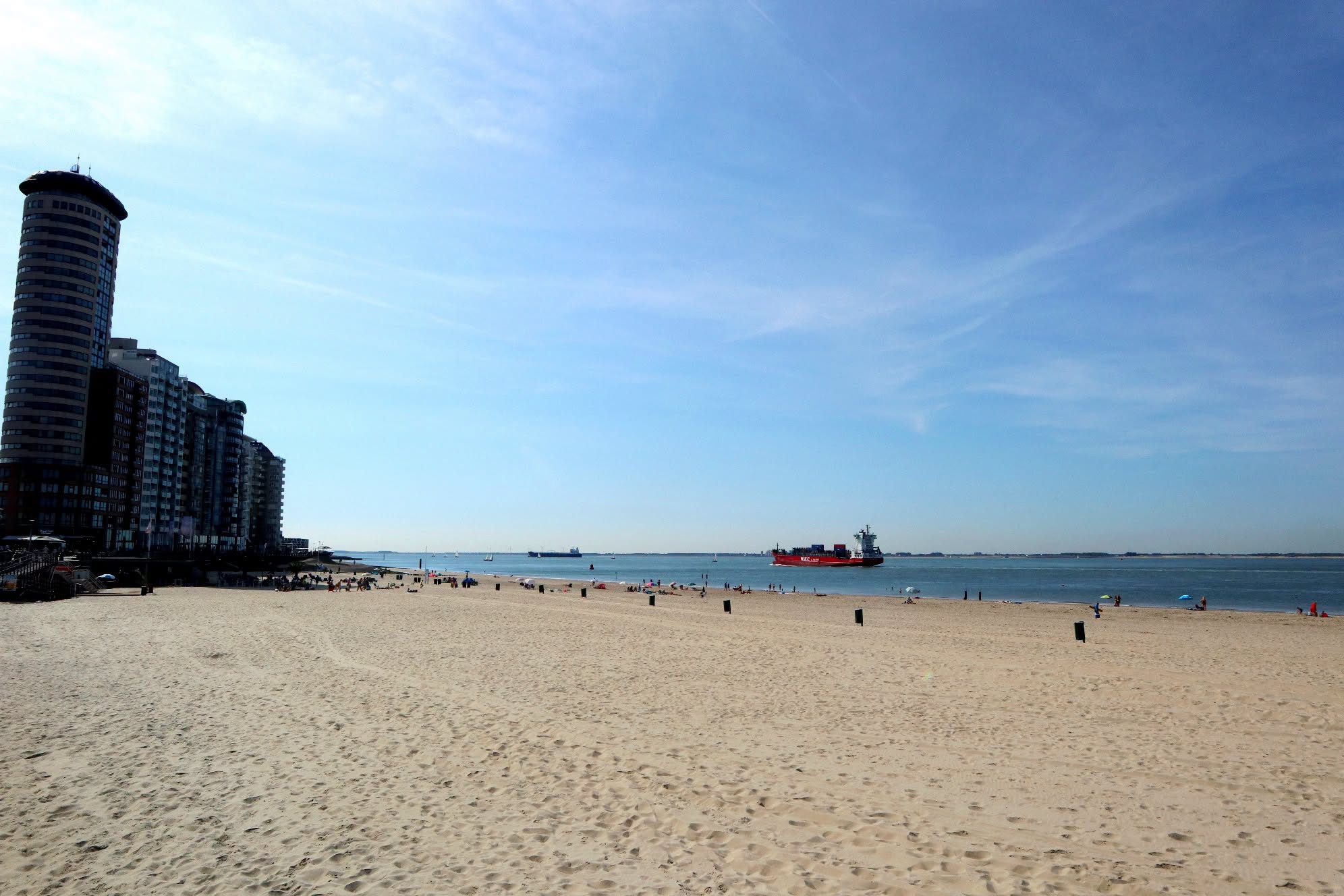
Cover image: A ship sails along the Dutch coast. A majority of seafarers working on Dutch-flagged ships are Filipinos. Now a foundation is pushing for a mass claim where seafarers of Asian origin are discriminated against because of lower wages./Jofelle Tesorio
THE HAGUE, The Netherlands — A foundation representing Filipino and Indonesian seafarers is preparing to sue the Dutch government in a class suit over discrimination of wages.
This after the Netherlands Institute for Human Rights ruled last year in a case involving a Filipino and an Indonesian seafarer that wage differences based on country of origin constitute discrimination. The Institute said Dutch shipowners discriminate against seafarers from other countries by applying different wages.
Negotiations followed between the government, the shipowners, and the Equal Justice Equal Pay Foundation, the group that represents the seafarers, regarding changes to salary regulations, but these fell out, the Dutch media reported.
According to the Equal Justice Equal Pay Foundation, after years of legal wrangling, it is now preparing a class action on behalf of 23,000 seafarers against the Dutch state and ship owners. It claimed that the Filipino and Indonesian seafarers are paid four times less than, for example, their German and Dutch colleagues. For the same work, a Filipino seafarer earns approximately 3.25 euros per hour, while Dutch colleagues can receive around 15 euros, it said.
The data from the KVNR or the Royal Association of Dutch Shipowners indicate approximately 23,000 seafarers from all over the world work on Dutch flagged ships.
Signatory to mass claim
Retired Filipino seafarer Danilo Dada is one of the signatories to the mass claim. In an interview with NOS public television, he said his salary was much lower than his European counterparts for the same job. “Months bago po ako nag-retire nalaman ko na hindi pantay-pantay ang sahod namin sa parehas na position. Parang na-discriminate po ng konti dahil ba kami ay Asian at sila ay European samantalang pare-pareho naman po ang trabahong aming ginagampanan,” he said.
In the interview, Dada said he worked for a shipping company that delivered windmill components. During his tenure as a seafarer, he was planning to set up a small business but it didn’t materialise. He said his only investment was his house that he still pays even up to retirement.
Back wages from 2016
Dutch lawyer Frank Peters, who is representing the seafarers, said in an interview with the Dutch media that they are going to reclaim the wages accrued since 2016, which he claimed involves a sum of billions of euros. “So as of today that is 10 years. Every year the proceedings drag on, additional damages are incurred," Peters added.
Ship owners justify this using the so-called country of residence principle. Under this principle, wages are based on the cost of living in the country where a person resides.
The Dutch shipping companies believe the difference in salary and other employment conditions is perfectly justifiable. "We reward based on purchasing power. According to the international maritime industry, that is also the fairest approach," said Annet Koster of the Royal Association of Dutch Shipowners, in an interview with the NOS public television.
According to the shipping association, the salary difference is also necessary to compete internationally. Koster fears that if the judge awards the class action lawsuit, "it is only a matter of time until ship owners go bankrupt or cut their losses and sail under another flag. After all, at the moment only Dutch ship owners are being held accountable for this."
A research study commissioned by the Dutch Ministry of Infrastructure and Water Management shows that a ban on the principle of the country of residence would cause ship owners' wage costs to rise by 20 to 35 per cent.
It is expected that half to three-quarters of shipowners might then decide to sail under another flag, resulting in damage to the Dutch economy of 125 to 200 million euros per year. Dutch captains and seafarers could also lose their jobs.
Incorrect assumptions
Lawyer Peters called the conclusions in the investigation "demonstrably incorrect". They countered it through another research by scientific research institute SEO Economisch Onderzoek (economic research). He said if proper statistical research is conducted, the situation is very different.
According to SEO research, the economic consequences of salary equalization are not as severe as feared: no more than 20 percent of the ships would sail under a different flag. Furthermore, according to the research institute, jobs do not necessarily have to be lost.
Level playing field
The NOS media also reported that the international trade union Nautilus International FNV, the international trade union that advocates for shipping workers, currently still supports the existing collective labor agreements, fearing that if only the Netherlands were to do this, the Dutch fleet would collapse.
In a response, the Ministry of Infrastructure and Water Management also states that changing the payment of seafarers without international coordination is undesirable. That would disrupt "the level playing field".
However, the lawyer representing the seafarers is defiant.
"We are also holding the Dutch State liable, because it makes this system possible and thereby facilitates structural discrimination. That is simply unacceptable," Peters told the Dutch media.
The foundation behind the claim
According to its website, the Netherlands-based not-for-profit Equal Justice Equal Pay Foundation “was established to represent the economic, financial, and legal interests of seafarers from low-wage countries. It strives to protect seafarers against exploitation and discriminatory treatment and to raise awareness of their plight worldwide, including in Indonesia and the Philippines, the Netherlands and the EU.”
It also sponsors academic research and other studies in fields related to human rights, non-discrimination, equal treatment and equal pay, international law and maritime law.
To pursue the case against the Dutch government, the foundation had a funding agreement with funder Guildford Funding LLC, a litigation funder based in Wilmington, Delaware, United States.
Guildford will provide funding for all expenses incurred in connection with the representation of the interests of seafarers residing in the Philippines and Indonesia.
“In return for the services rendered and the risks and costs assumed by the funder, the funder shall be entitled to reimbursement of all expenses incurred by the funder in relation to the Foundation, including the costs of the lawyers and the funder will receive a fee equal to 20% of the net financial recovery. Net financial recovery means the financial recovery minus the expenses reimbursed or reimbursable to the funder,” the website of Equal Justice Equal Pay Foundation stated.
The foundation also claimed that conditions agreed with the US-based funder are in line with the Dutch Claim Code. “The funding conditions also do not conflict with the collective interests the Foundation aims to protect on the basis of its articles of incorporation,” it added.
The discrimination case
In 1997, a Filipino and an Indonesian seafarer challenged the country‑of‑residence principle used in Dutch commercial and work‑vessel Collective Bargaining Agreements (CBAs), which pays non‑European crew according to wage standards in their home countries. This results in significantly lower pay than their European colleagues.
They argued this system is discriminatory on the grounds of nationality and race. The Filipino claimant also described a class divide on board, reinforced by the justification that wages reflect lower price levels linked to poverty.
The companies, supported by CBA parties and the Minister of Infrastructure and Water Management, denied discrimination. Although the Equal Treatment Commission upheld the CBA in 1997, the Institute for Human Rights, the predecessor of the Commission, reassessed the issue nearly thirty years later.
In August 2025, the Institute ruled that both employers had unlawfully discriminated against the Filipino and Indonesian seafarers.


