Filipino Artist Berjer Capati Explores War and Human Desire in Barcelona Exhibition
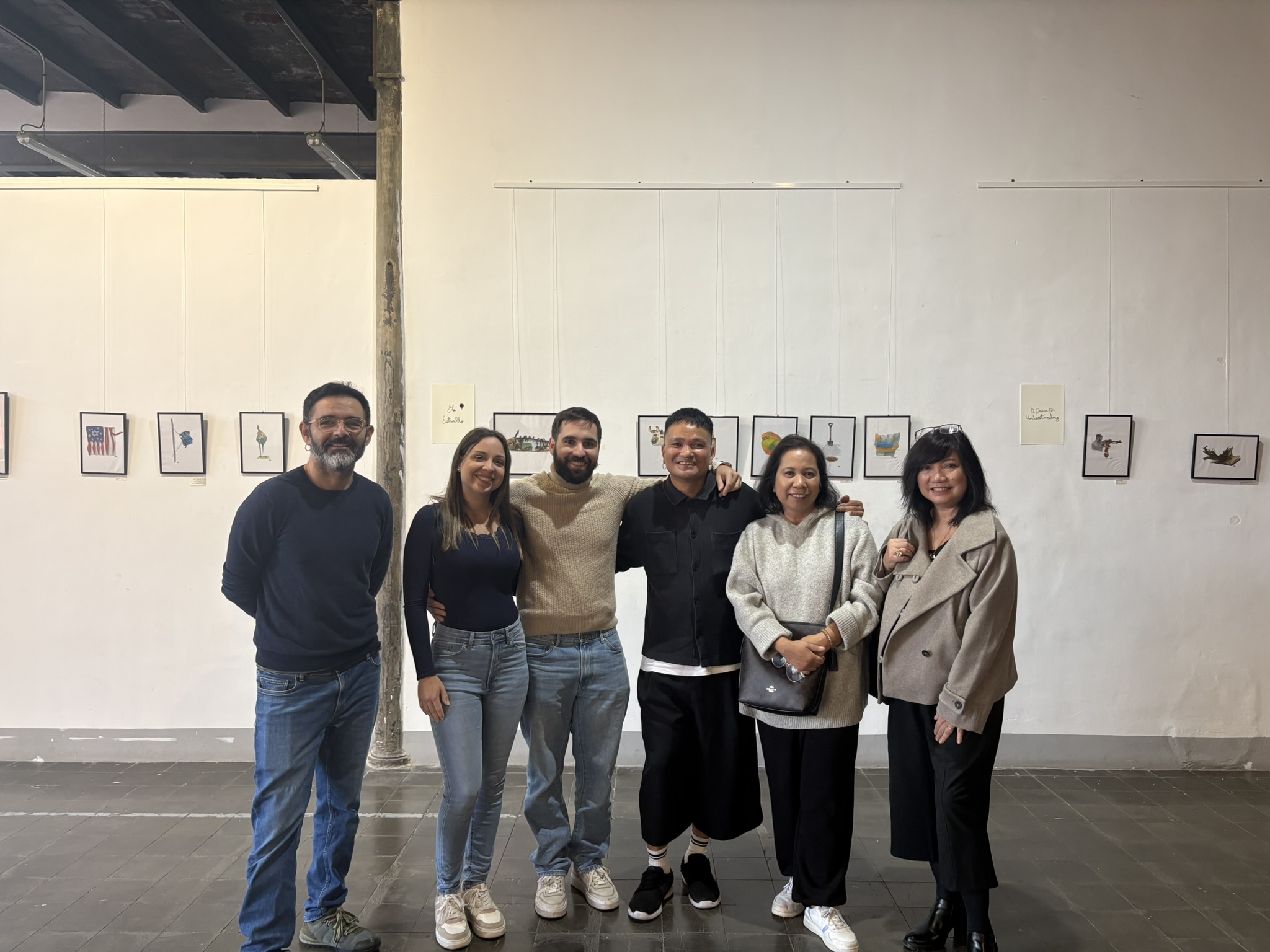
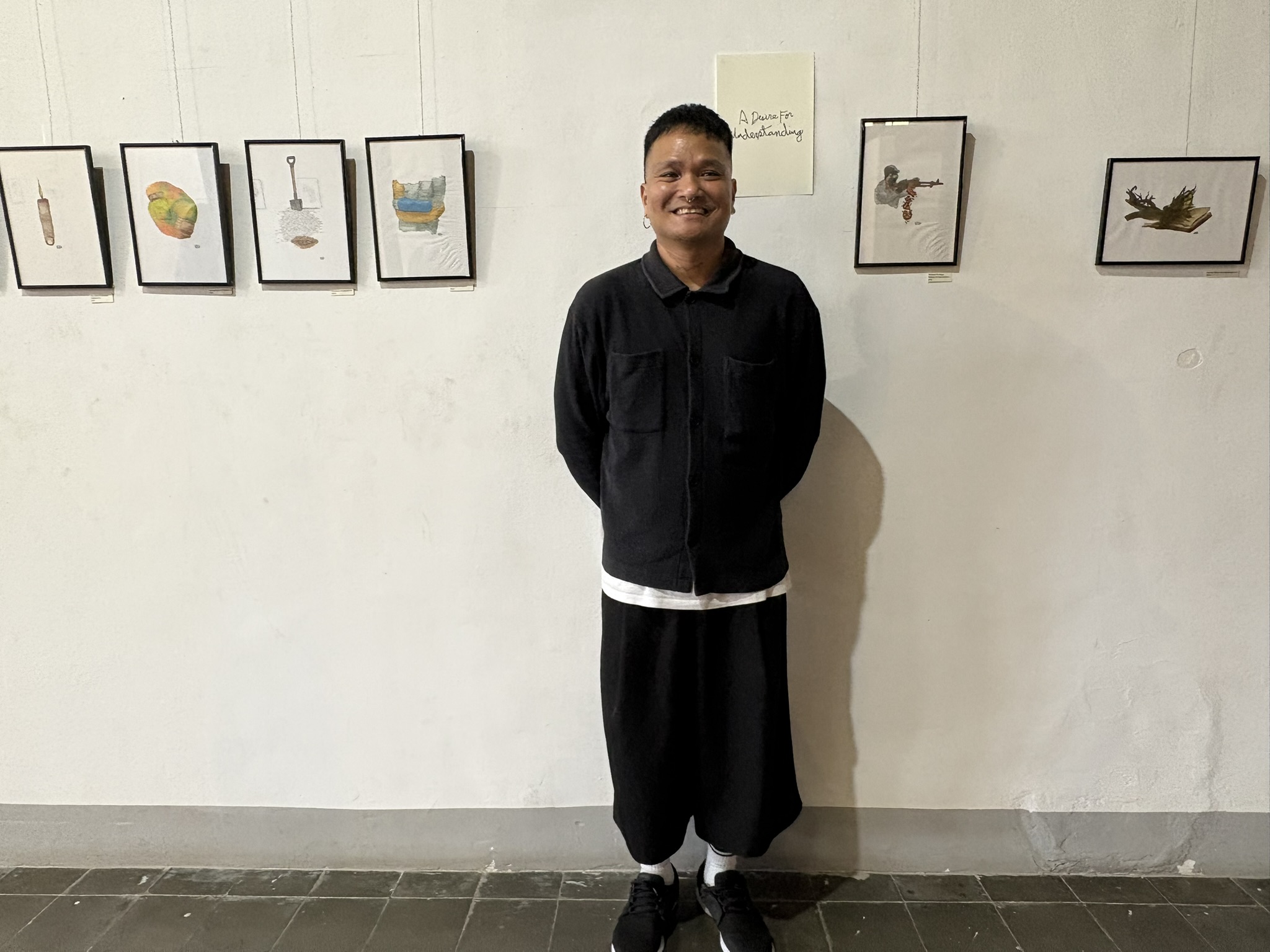
BARCELONA, Spain — Filipino artist Berjer B. Capati examines war, human desire and the consequences of conflict in his solo exhibition, A Desire For More Cows, which opened on November 6 and runs until November 30 at Can Batlló in Barcelona. Featuring 29 artworks and one installation, the exhibition explores the causes of armed conflicts and their impact on human lives and the environment.
On February 25, 2022, Capati was sitting at a café when he picked up a copy of the Spanish newspaper La Vanguardia. Across its front page were the words “GUERRA EN EUROPA” (WAR IN EUROPE). For Capati, who had moved to Spain to live and study, the headline raised a troubling question: how could another war break out in Europe despite decades of peace treaties and international agreements?
The news brought back childhood memories of reading the magazine Asiaweek in the Philippines, where he first encountered photographs of people displaced by war. It also reminded him of articles about the conflicts in Bosnia and Kosovo that he had read in another Spanish newspaper, El País, after moving to Spain.
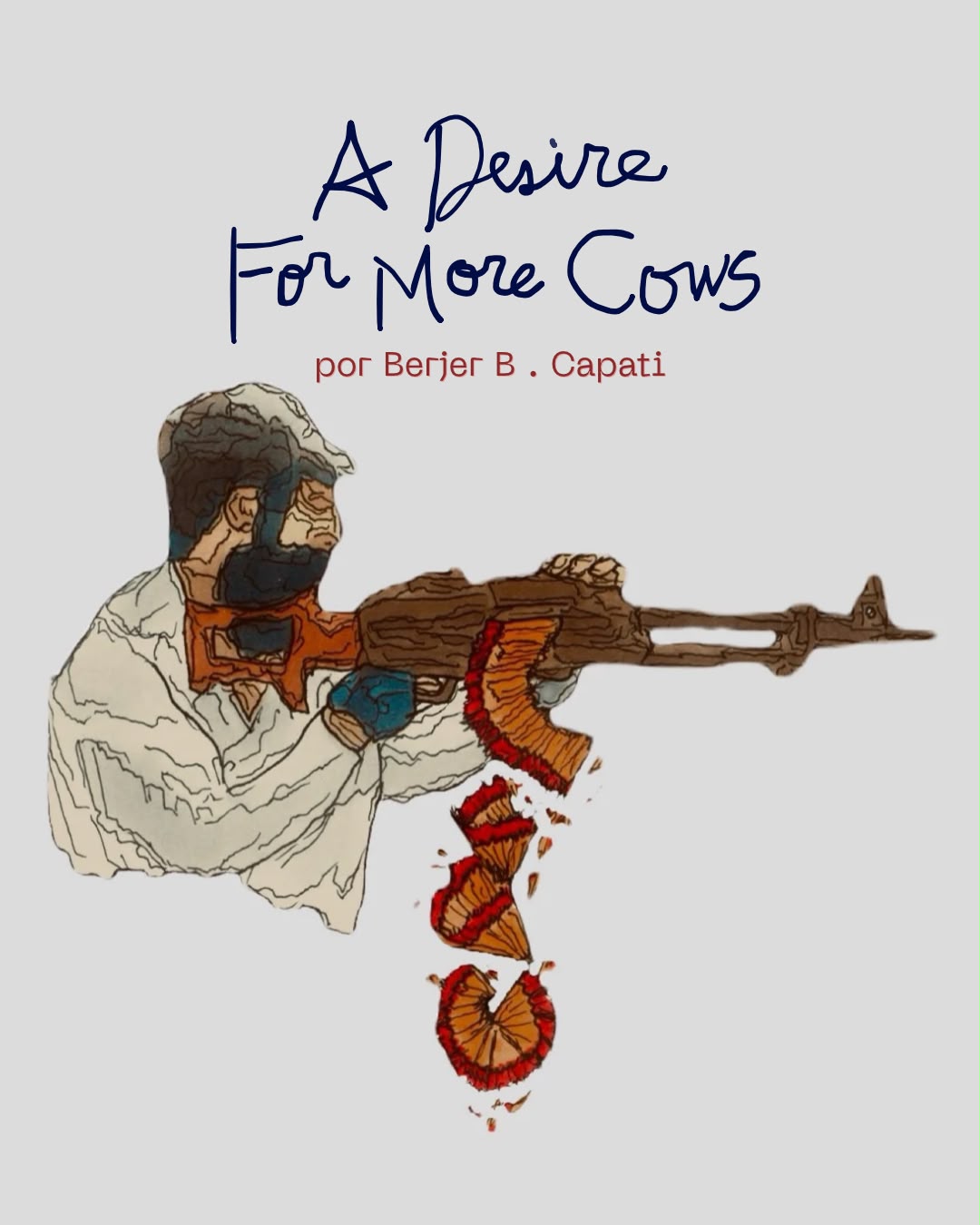
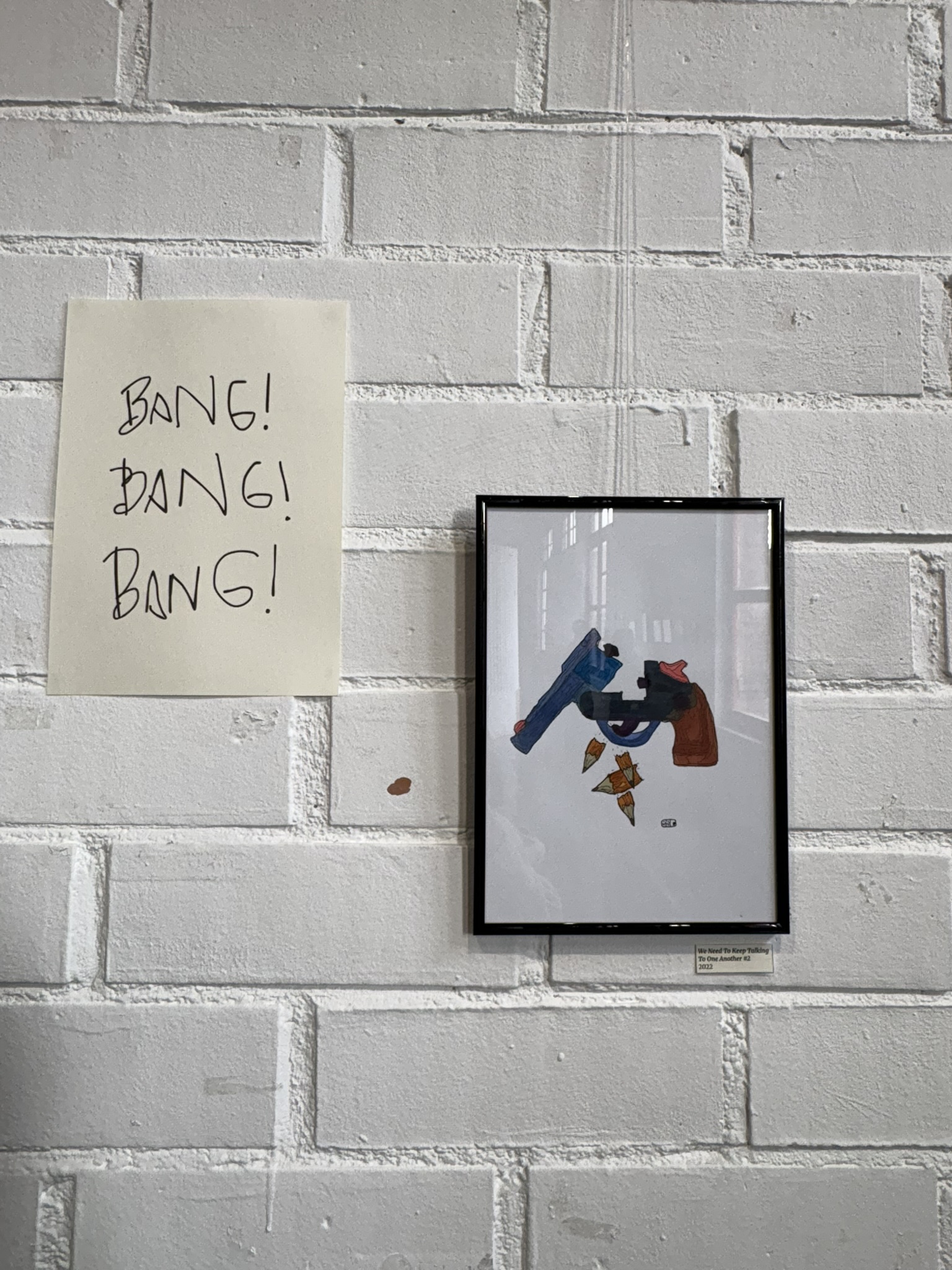
On March 1, 2022, five days after Russia invaded Ukraine, Capati created We Need to Keep Talking to Each Other, the drawing that now serves as the exhibition's cover image. Using alcohol-based markers on paper, he deliberately gave it a childlike appearance, associating the wear and tear of a pencil with the deterioration of human communication. He initially hoped the fighting would end within days. Instead, the drawing became the beginning of an unexpected series of works dealing with war.
The exhibition's unusual title, A Desire For More Cows, was inspired by Denis Villeneuve's 2016 science-fiction film Arrival, starring Amy Adams and based on Ted Chiang's short story Story of Your Life. Capati recalls being fascinated by a scene in which translators discuss the Sanskrit word gavisti, associated in the film with war. One character interprets it as an argument, while another offers the phrase “a desire for more cows.”
At first, Capati did not understand the connection between cattle and war. He later came to understand cows as symbols of livelihood, fertility and abundance. For the artist, it is not necessarily the possession of more that leads to conflict, but the desire to have more. Referring to current wars and territorial disputes, he questions whether this desire among those in power is driving everyone else away from their own desired and conquered cows.
Another piece, We Need to Keep Talking to One Another #2 (2022), depicts a handgun with broken pencil fragments falling from it. It forms part of Bang! Bang! Bang!, which Capati describes as the exhibition's most violent section. The drawing's title, also inspired by Arrival, reflects his concern over the breakdown of human communication.
In Ode to Gaza’s Children (2025), Capati depicts two coloured balloons alongside a cooking pot, contrasting the ordinary pleasures of childhood with the struggle to find food. The drawing was inspired by newspaper photographs of children in Gaza holding containers to receive food. An installation featuring white balloons attached to lengths of barbed wire anchored to bricks further explores the theme.
The images of children in Gaza reminded Capati of his own experience of hunger. Capati grew up in a financially comfortable household in the Philippines before a change in his family's circumstances led him to experience hardship and hunger during his college years. “I know what it is like to go hungry,” he said. “Children should never go hungry. Never.”
For visitor Gina Kearns, Ode to Gaza’s Children was her favourite. “I particulary like what it represents and how the artist managed to express a current event with emotion and art,” she said.
Another work that has attracted visitors' attention is Die Reise der Hoffnung (The Journey of Hope) (2026), a drawing depicting a zoomorphic drone carrying an olive branch. It forms part of a section called Shalom, the Hebrew word for peace. Capati borrowed the title from a 1990 Swiss film about a Turkish family's attempt to migrate to Switzerland.
A Venezuelan journalist who visited the exhibition told him that the image captured the concept of hybrid warfare. For Capati, the drawing reflects how warfare has changed and wonders whether technology could be used to bring peace rather than destruction.
University history student David Muñoz singled out The Things We Do To Each Other (2022), a work featuring the European Union and Ukraine, which he interpreted as a reflection of the EU's inability to prevent deaths in Ukraine despite its efforts to protect Europe.
During guided tours, Capati encourages visitors to express their own interpretations, finding this more enriching than simply explaining why he created each drawing. He concludes his tours by calling attention to the often overlooked effects of war on animals and nature.