



Filipinos Can Get UAE Visa-on-Arrival — But It’s Not a Blanket Visa-Free Privilege
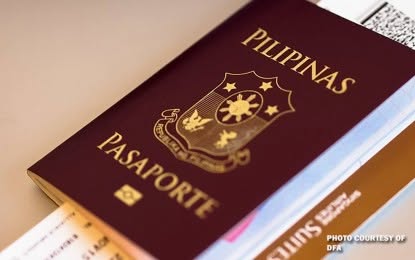
Photo: Department of Foreign Affairs (DFA)
MANILA – Filipinos with certain foreign visas or residence permits can now qualify for a visa-on-arrival in the United Arab Emirates (UAE), under updated guidelines announced by the Philippine Department of Foreign Affairs (DFA).
The new policy, however, should not be confused with a blanket visa-free arrangement for all Philippine passport holders.The distinction is particularly important, as noted by the UAE Embassy in Manila.
The claim that “Filipinos can now get a UAE visa-on-arrival” needs an important qualifier: Not every Filipino passport holder qualifies. A Filipino tourist without a qualifying visa or residence permit from one of the specified countries should not assume that the new arrangement allows them to board a flight to the UAE and obtain a visa at the airport.
What changed?
There’s an important criteria for this visa-on-arrival facility: Eligible Filipino citizens must hold a valid regular Philippine passport with at least six months' validity and must also possess qualifying immigration documents from designated countries. Filipinos with valid visas or residence permits issued by the following jurisdictions may qualify: United States, European Union (EU) countries, United Kingdom, Filipinos with valid residence permits from the following countries may also qualify: Japan, South Korea, Australia, Canada, Singapore, New Zealand.
The applicable foreign visa, residence permit or Green Card must also meet the UAE's six-month validity requirement.
What the UAE Embassy in Manila stated
According to the UAE Embassy in Manila, the consulate section handles certificate and document authentication, visas for government officials and diplomats, and other notarial services. For ordinary visit visas, the embassy states that “the UAE embassy Manila does not issue visa.” The embassy explains that a visit visa is generally granted to foreigners entering the UAE temporarily for personal reasons, tourism, or visits to relatives and friends.
Applicants for this type of visa must instead be sponsored by a person currently residing in the UAE, according to the embassy's guidance. The embassy also says that a visit visa is valid for 60 days from the date of issuance and permits the holder to remain in the UAE for 30 days from the date of entry, with penalties imposed if the visa is not renewed. The embassy separately describes a multi-entry visit visa for tourists or foreign nationals intending to visit the UAE several times during a specified period.
How much is the visa-on-arrival? The DFA lists two options for eligible travelers:
14 days -- AED 100/ about $28 (May be extended once for another 14 days for AED 250)60 days -- AED 250 (about $68) - Not extendable Applications can be made at UAE airports or through the UAE's ICP Smart Services platform. Applications made online through ICP incur an additional AED 150 service fee per request, according to the DFA. However, possessing the required documents does not automatically guarantee admission. The issuance of the visa-on-arrival and entry into the UAE remain subject to assessment and approval by UAE immigration authorities.
Embassy's guidance
The UAE Embassy in Manila's own information helps clarify a potential source of confusion.Its description of ordinary visit visas concerns the traditional sponsored-visit-visa route. The DFA announcement, meanwhile, concerns a specific visa-on-arrival facility for qualifying Filipino travelers.These are different mechanisms.
Philippine passport's global ranking
The development comes as the Philippine passport continues to improve its position in international mobility rankings. In the 2026 Henley Passport Index, the Philippines ranks 72nd globally, with access to 66 visa-free destinations under the index's methodology. That puts the Philippines in the middle of the ASEAN rankings — not among the region's strongest passports, but ahead of several Southeast Asian countries. Singapore remains the world's strongest passport in the 2026 ranking, while Malaysia is also among the global leaders. The Philippines trails regional passports such as those of Singapore, Malaysia, Brunei, Thailand and Indonesia. The UAE itself is an especially notable comparison: its passport ranks among the world's strongest, reflecting the country's extensive network of visa-waiver and visa-on-arrival arrangements.
Bottom line for Filipino travelers, the new UAE policy is good news for a specific group of Filipinos, particularly those who already hold qualifying visas or residence permits from major destination countries.
Before traveling, Filipinos should check: whether their Philippine passport has at least six months' validity; whether their foreign visa or residence permit falls under the UAE's qualifying categories; whether that document also satisfies the required validity period; which visa-on-arrival option applies; and the latest requirements with UAE immigration authorities before departure.
The UAE Embassy in Manila also advises applicants seeking ordinary visit visas to contact the consulate for more information, while emphasising that the embassy itself does not issue ordinary UAE visit visas. TLDR: the UAE has made entry easier for some Filipinos — but this is a conditional visa-on-arrival facility, not a blanket visa-free policy for the Philippine passport.


