



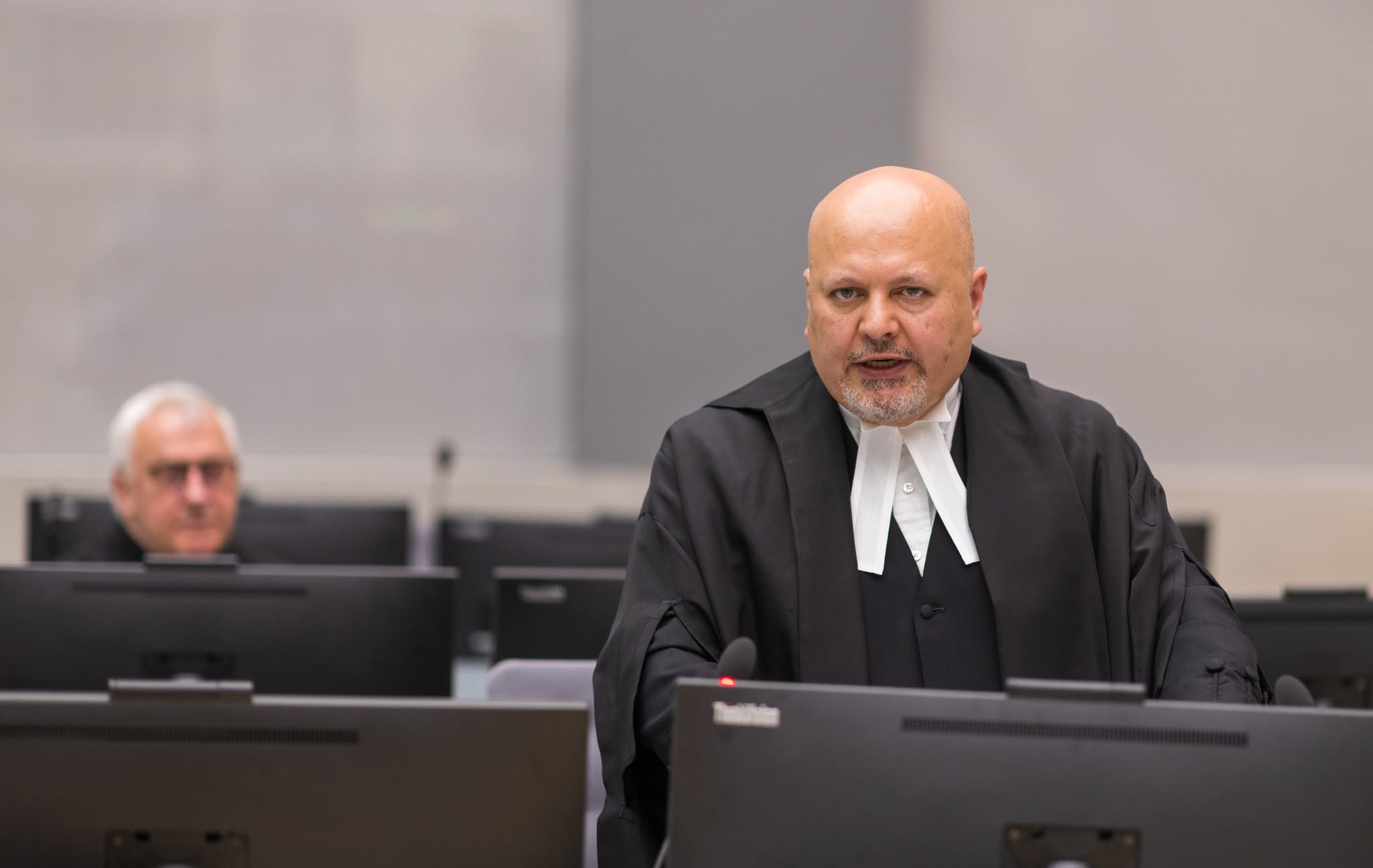
ICC suspends chief prosecutor Khan over misconduct
THE HAGUE, Netherlands — The chief prosecutor of the International Criminal Court was suspended Monday, 8 June 2026, following allegations of sexual misconduct.
In a statement, the court’s oversight body said its executive committee had referred the disciplinary case to the Assembly of States Parties, which will determine whether he should be removed from office.
The British prosecutor has denied allegations that he maintained an inappropriate relationship with a female subordinate. He has been on voluntary leave since last year while the matter was under review.
The Assembly of States Parties — the 125‑member body that supervises the ICC — is expected to vote on his possible dismissal during a special session. A date has not yet been set.
The allegations were first reported to an internal watchdog in May 2024 by two colleagues. An initial inquiry was closed within days, but leaked claims of unwanted sexual contact prompted a second investigation.
A subsequent UN inquiry found evidence of inappropriate behaviour, though a panel of ICC judges reviewing the findings said the available evidence was insufficient to reach a firm conclusion.
The prosecutor is also currently under U.S. sanctions, along with several other ICC officials, in connection with the court’s arrest warrants for Israeli leaders.
Intelligence firms collecting ICC info.
In a related news, Dutch media reported in May 2026 that the Netherlands’ National Coordinator for Counterterrorism and Security (NCTV) has investigated a covert intelligence operation in which two London‑based private intelligence firms collected sensitive personal information for months on ICC staff in The Hague, as well as on their children and other relatives.
According to the report of Dutch newspaper NRC, the primary target was a 38‑year‑old ICC lawyer who filed a sexual‑abuse complaint against Khan in early 2024.
Documents and recordings reviewed by NRC as part of the Dutch inquiry indicate that other ICC employees were also monitored because of their connection to the allegations against Khan or their involvement in handling the case.
Investigators found that private operatives sought material that might suggest a cover‑up or links to Israel or its intelligence service, Mossad. The operation took place more than a year after the ICC issued an arrest warrant for Israeli Prime Minister Benjamin Netanyahu.
In December, the NCTV interviewed several ICC employees about the activities of the London firms, four people familiar with the matter told NRC. In a confidential letter to the court, seen by the newspaper, the agency said it had shared information from those interviews with Dutch intelligence services and police, who are now examining possible criminal offenses. The NCTV declined to comment on the status of the investigation, and police did not respond to questions.
In its letter, the NCTV wrote that while it had “no indications of a physical threat,” it recognized that the circumstances “can be intimidating or perceived as threatening.” ICC staff frequently work on sensitive matters, including support for victims in high‑profile cases.
One of the London firms, Highgate, confirmed to NRC that it carried out the investigation. It described its work as an inquiry into “possible secret or inappropriate activities” that might undermine the ICC’s credibility or independence. Highgate declined to say who commissioned the operation, why the court was not informed, or with whom the findings were shared.
The ICC said that external investigations targeting its staff are “unacceptable,” as are efforts to “attack or hinder” its employees, and noted that it is working with Dutch authorities on “appropriate measures.”
Khan’s lawyers told NRC that “every suggestion” that he was involved in or ordered such an operation “is completely incorrect.”


