



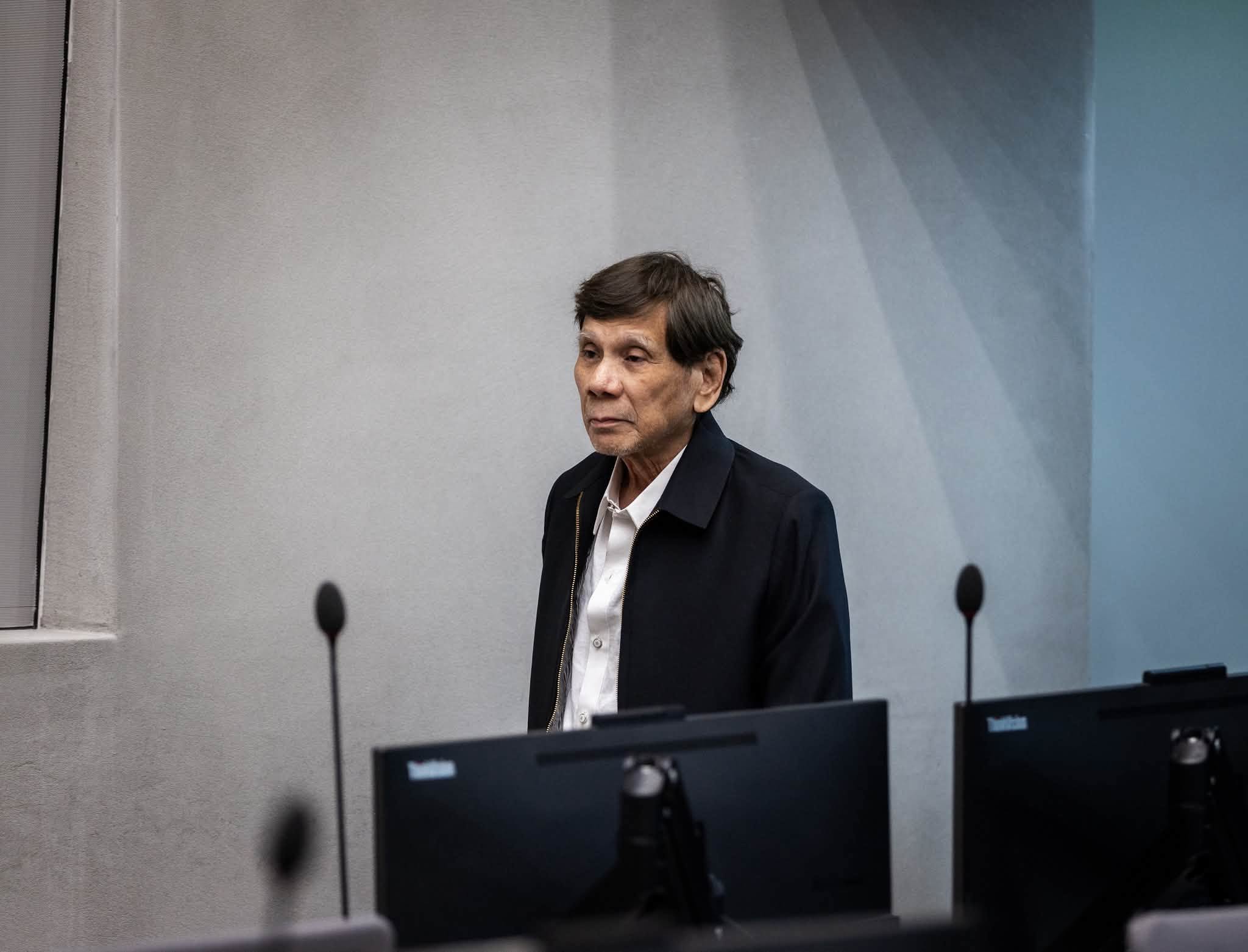
ICC trial of Rodrigo Duterte to open on 30 November; judges to ask Duterte to enter plea
THE HAGUE — The International Criminal Court, ICC, will formally open the trial of former Philippine president Rodrigo Duterte on 30 November, with the judges expected to ask him to enter a plea before hearing opening statements and the testimony of the prosecution's first witness.
In a statement to the media on Tuesday, 24-11-2026, the ICC said Trial Chamber III would begin hearing the case at 10 a.m. in The Hague, where Duterte faces charges of crimes against humanity involving murder and attempted murder allegedly committed in the Philippines between November 2011 and March 2019.
The prosecution alleges that the crimes formed part of a "widespread and systematic attack against a civilian population". The charges cover alleged killings in Davao City during Duterte's time as mayor, as well as alleged killings and attempted killings linked to anti-drug operations during his presidency.
The ICC stressed, however, that the charges remain allegations and that it will be for the judges to determine whether they have been proved beyond reasonable doubt.
"Mr Duterte is presumed innocent unless and until proven guilty before the Court," the ICC said.
Duterte to be asked to enter plea
The first order of business on 30 November will be for the judges to establish that Duterte understands the charges against him and to ask whether he admits guilt or pleads not guilty.
The Chamber will then hear the opening statements of the prosecution and the Common Legal Representatives of Victims. The defence may make brief remarks on the opening day, while its full opening statement is expected to be delivered later in the trial.
The prosecution has been allocated up to six hours for its opening statement, while the victims' legal representatives have been allocated three hours. The statements will be spread across four hearing sessions on the opening day, according to the ICC's practical information.
After the opening statements, the prosecution's first witness is expected to take the stand on the third day of the trial.
The ICC said the first five prosecution witnesses are expected to testify before the Court's winter judicial recess begins on 18 December.
The prosecution currently anticipates calling about 100 witnesses during its case.
The prosecution's case is expected to run for several months before the defence gets the opportunity to present its own witnesses and evidence.
Three counts before the trial chamber
The ICC has previously confirmed three counts of crimes against humanity against Duterte.
The first concerns alleged murders in Davao City during his period as mayor, from 2013 to around June 2016.
The second concerns alleged murders of so-called "high-value targets" in various parts of the Philippines between around July 2016 and July 2017, during his presidency.
The third involves alleged murder and attempted murder during so-called barangay clearance operations between around July 2016 and September 2018.
The Pre-Trial Chamber unanimously confirmed all the charges on 23 April 2026 and committed Duterte to trial. The ICC Presidency subsequently constituted Trial Chamber III to hear the case.
The trial chamber is composed of Presiding Judge Joanna Korner, Judge Keebong Paek and Judge Nicolas Guillou.
More than 500 victims participating
The proceedings will also formally involve victims of the alleged crimes.
The ICC said more than 500 victims have been authorised to participate in the proceedings through common legal representatives, who will present their views and concerns to the court.
The Court said victims and witnesses may also be granted protective measures depending on their individual circumstances.
The ICC has previously said that 539 victims who participated during the pre-trial phase would automatically continue participating in the trial.
Victims' legal representatives have a distinct role in ICC proceedings. They may make statements, submit observations on matters affecting victims' personal interests and, if there is a conviction, participate in the reparations stage.
ICC stresses it is not a political process
With the Duterte case having generated intense interest in the Philippines, the ICC sought to emphasise the judicial nature of the proceedings.
"The Court's role is not to pursue any political objective," it said.
"Rather, its role is to determine, through independent and impartial judicial proceedings, whether the charges have been proven according to the law."
The Court also stressed that Duterte is entitled to the full fair-trial guarantees under the Rome Statute, including adequate time and facilities to prepare his defence, the ability to challenge prosecution evidence and the opportunity to present his own evidence and witnesses.
Duterte is represented by lead counsel Peter Haynes KC and associate counsel Kate Gibson.
The ICC's Trial Chamber ruled in September, in a decision made public on 8 October, that Duterte was fit to stand trial and could effectively exercise his fair-trial rights.
Trial could last months
The Court cautioned that the proceedings are expected to take considerable time.
The ICC said the length of the trial will depend on the volume of evidence, the number of witnesses and procedural issues that may arise. Its own guidance says the trial may last many months, given the complexity of the allegations, the number of incidents involved and the need to protect witnesses and ensure the accused's rights.
After the prosecution finishes presenting its evidence, the victims' legal representatives may submit observations before the defence presents its case.
Once all evidence has been heard, the three judges will deliberate and issue a judgment. A conviction can be entered only if the Chamber is satisfied that the charges have been proved beyond reasonable doubt.
The prosecution or defence may appeal a judgment and/or sentence before the ICC Appeals Chamber.
Proceedings will be publicly streamed
The opening hearing will be accessible to the public, subject to the Court's rules on confidential evidence and protective measures.
The ICC said hearings can be followed online through its website, Facebook and YouTube channels. The webstream will be subject to a 30-minute delay.
The Court may move portions of hearings into private or closed session when necessary to protect confidential information, victims, witnesses or other participants.
The 30 November hearing therefore marks the beginning of the trial proper, rather than a new determination of whether Duterte should face charges. The charges have already been confirmed by the Pre-Trial Chamber; the task now before Trial Chamber III is to determine, after hearing the evidence, whether the prosecution can prove those charges beyond reasonable doubt.


