



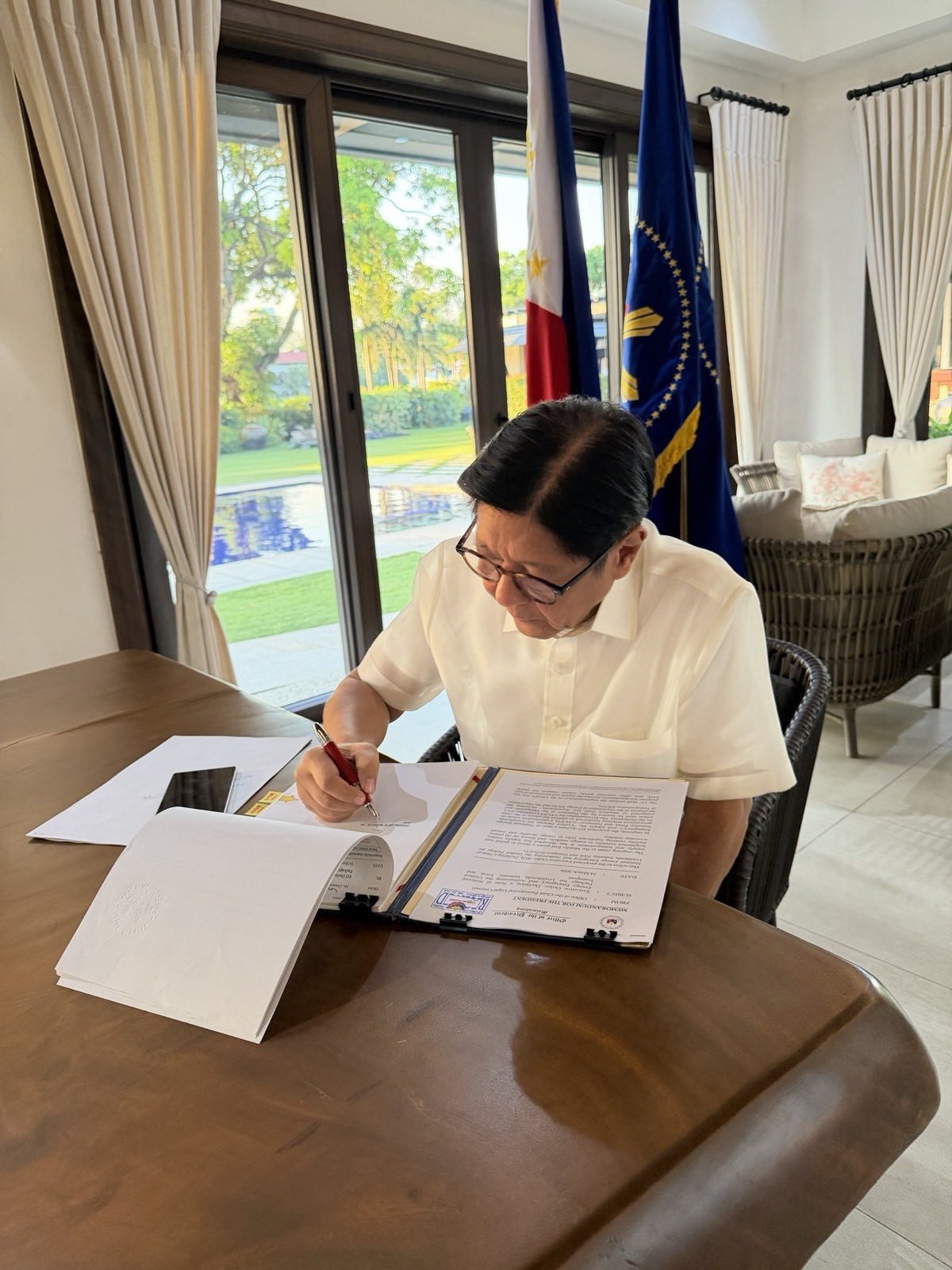
PBBM Declares State Of National Energy Emergency
MANILA, Philippines – In a swift response to the escalating conflict in the Middle East and its "imminent danger" to the country’s fuel supply, President Ferdinand Marcos Jr. officially declared a State of National Energy Emergency on Tuesday, 24 March 2026.
The declaration, formalised through Executive Order No. 110, marks the first time a Philippine president has exercised such authority under Republic Act 7638. The order comes as global oil prices surge following the closure of the Strait of Hormuz—a critical maritime corridor for global energy shipments.
Key Measures Under the Emergency
The declaration activates a whole-of-government framework known as UPLIFT (Unified Package for Livelihoods, Industry, Food, and Transport). This strategy aims to shield Filipino consumers from the economic "shocks" of the Middle East crisis.
Fuel Subsidies: The government has begun releasing ₱5,000 in aid to motorcycle taxi riders and other public transport workers. Bus operators are reportedly set to receive up to ₱10,000 per unit to keep public transport operational.
Emergency Procurement: The Department of Energy (DOE) and the Philippine National Oil Company (PNOC) are now authorised to make 15% advance payments to secure international fuel contracts and prevent a domestic shortage.
Anti-Hoarding Crackdown: Authorities have been granted expanded powers to take direct action against fuel hoarding and price profiteering.
Tax Relief: The House of Representatives has already transmitted a bill to the Senate seeking to suspend the excise tax on fuel, while senators are considering a further reduction or suspension of the 12% Value-Added Tax (VAT) on petroleum products.
Impact on Energy Production
Energy Secretary Sharon Garin announced that the Philippines will "temporarily" lean more heavily on coal-fired power plants to keep electricity costs manageable. While the country aims to transition to renewable energy, the current crisis has made expensive Liquefied Natural Gas (LNG) imports less viable.
The government is also negotiating with alternative suppliers, including Brunei, Indonesia, and South Korea, to diversify its energy sources and reduce its 26% dependence on Middle Eastern oil.
Humanitarian Concerns
Beyond energy, the President has ordered the Department of Migrant Workers (DMW) to prepare for the possible large-scale repatriation of the 2.4 million Filipinos currently living and working in the Middle East.
"Everything that has been discussed is not based on speculation; these are based on official audit findings and real-world disruptions," noted lawmakers supporting the measure. "This is about staying ahead of the crisis before it hits Filipino families harder."
The State of National Energy Emergency is expected to remain in effect for one year, unless sooner lifted by the President.


