



Parallel Pleas: The Dutertes And Drug War Victims´ Families In The ICC´s Motion Of Justice
THE HAGUE, Netherlands—On the day that the charges for crimes against humanity hearing for former Philippine president Rodrigo Duterte was supposed to start, both the members of the Duterte family and the families of the victims of Duterte´s brutal war against drugs are hoping for a resolution. One demands that the former president be released soon, the other demands that the charges be confirmed so he can stand trial.
The confirmation of charges hearing for Duterte, a part of the pre-trial process at the International Criminal Court (ICC), originally scheduled on September 23, 2025 was postponed a limited period to give the pre-trial judges the time to weigh in the request of the defence to halt the proceedings citing the unfitness of Duterte to stand trial ¨as a result of cognitive impairment in multiple domains¨. ¨We are so sad na naantala. It's better for the process to be faster than this. Six months na siya nasa loob. Six months… So, I think, pwede lang sana. Pwede na sana. He will be released… interim release... Okay na sa amin. And besides, Rodrigo said he is accepting everything. Whatever comes to him, he's accepting it. Okay na daw siya. Parang may acceptance na siya,¨ said Duterte's former wife Elizabeth Zimmerman after a visit on September 23, 2025 with her granddaughter Isabel Duterte.
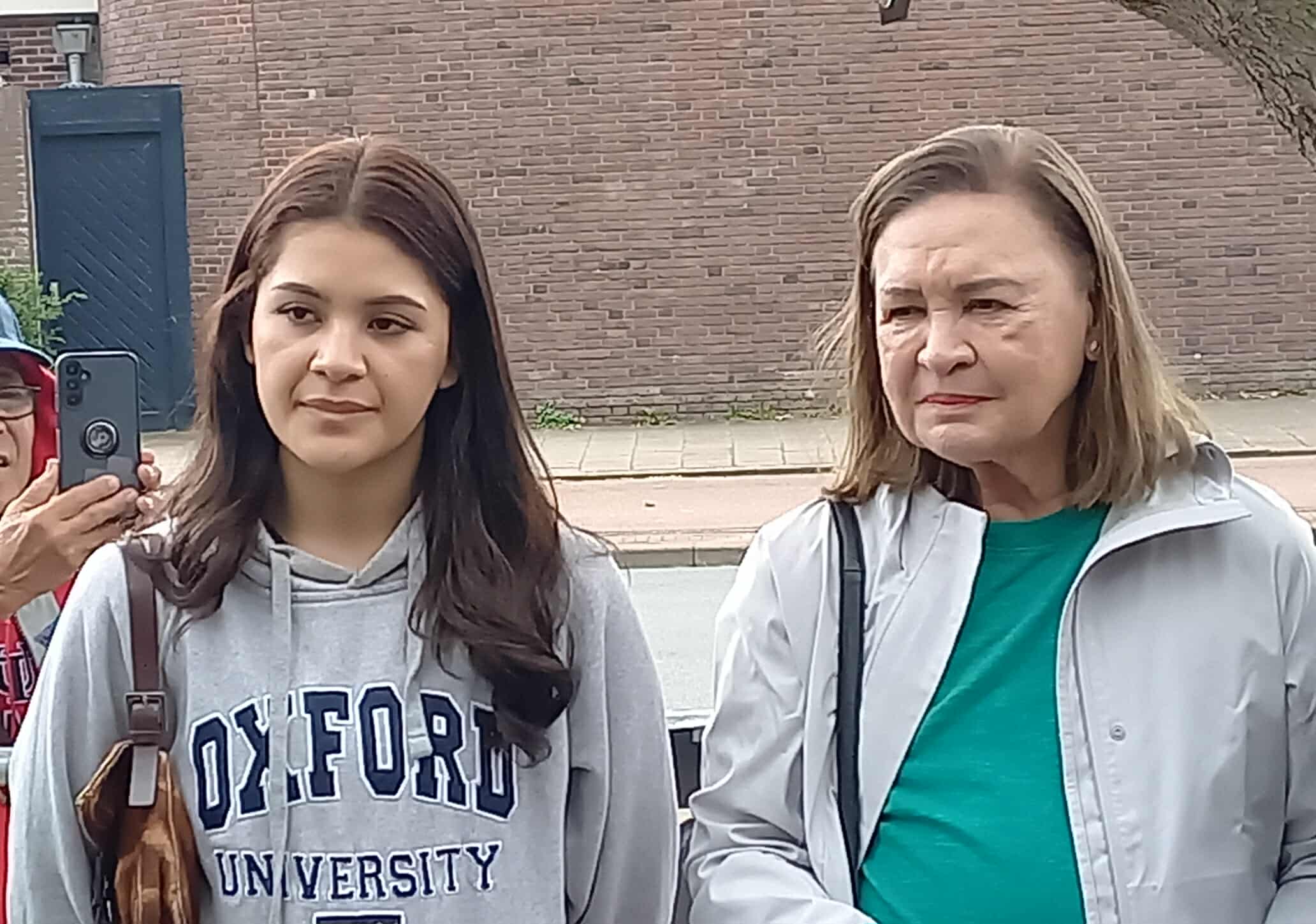
In photo: Duterte's former wife Elizabeth Zimmerman with granddaughter Isabelle Duterte
Members of the Duterte clan had been giving regular updates to supporters after their visit but recently were asked to refrain from discussing in public matters they spoke with the former president.
For lawyer Kristina Conti, who is representing many victims´ families, until now there is uncertainty if and when justice will be served for them. ¨Very stark na, kay Duterte may nakakapag-update, o ito yung nangyari sa kanya. Parang halos, ginawa na nga nilang parang Cubao lang yung The Hague. Every week, every other week, may bisita siya, may kapamilya. Samantalang sila, yung mga namatayan, saan mo dadalawin? Hindi pa nga nakaburol sa maayos na puntod. Yung mga dating namang nakulong, ang iniisip nila. Nung panahon nga namin, hirap na hirap kaming bisitahin at wala kaming pera na mag-supply doon sa nakakulong. Kaya bittersweet para sa kanila na nakakulong na pero naalala nila yung kapamilya nila."
(¨Very stark. With Duterte someone can update, or this is what happened to him. It's almost like they've made The Hague like Cubao. Every week, every other week, he has a visitor, a family member. Meanwhile, those who died, where will you visit them? They haven't even been buried in a proper grave. They're thinking about those who were previously imprisoned. During our time, it was very difficult for us to visit and we didn't have the money to supply those who were imprisoned. So it's bittersweet for those who are already imprisoned but they remember their family members)," lamented Conti.

In photo: Victims' lawyer, Atty. Kristina Conti
Emotions are still raw for victims' families, but the Dutertes firmly believe that the former president is also a victim of political machinations at home, while the ICC use this case as a tool to remain relevant.
Actions in the Hague
Despite the postponement of the confirmation of charges on September 23, 2025, both supporters of Duterte and groups that demand accountability gathered in different parts of the Hague to drumbeat their calls.
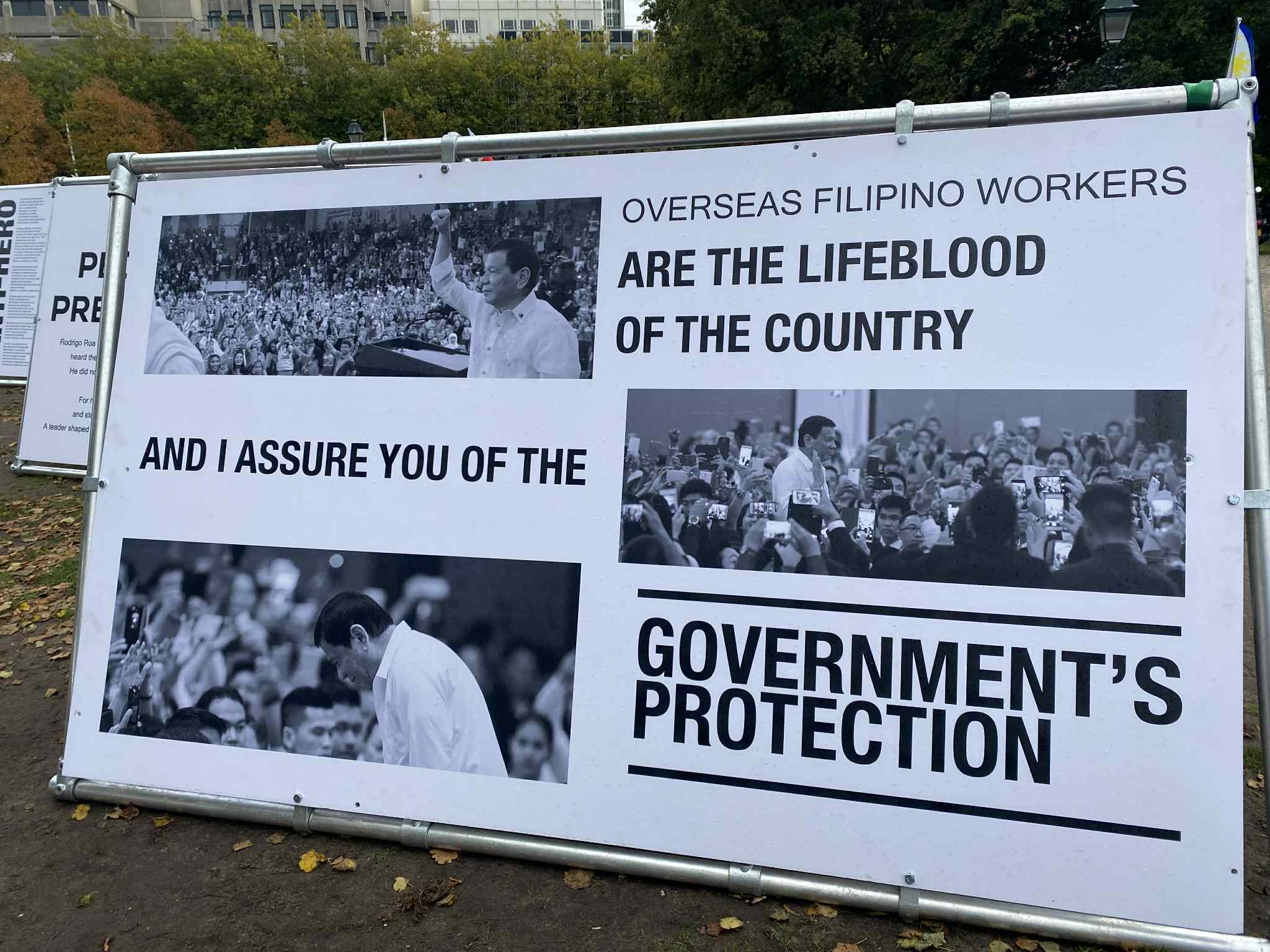

Duterte supporters staged outdoor exhibits of the former president, highlighting his achievements and his love for the country, and gathering daily in front of the ICC detention center. They also set up a stage in a street named after Reagan and Gorbachev, ironically two presidents who were responsible for ending the Cold War. In that stage, the supporters were entertained by singing and dancing, while chanting bring him (Duterte) home.
Meanwhile, groups demanding accountability gathered in front of the ICC and Peace Palace, the seat of the Permanent Court of Arbitration that ruled in favor of the Philippines in the case against China on the West Philippine Sea in 2016. Mostly human rights and migrant activists, lawyers, social workers, students, the so-called anti-Dutertes are demanding not just justice for victims of the war on drugs, they are also known to defend other rights abuses including against corruption. Both sides also represent a different make-up of the Filipino diaspora abroad. They have different backgrounds and beliefs. One that believes so much on the power of personalities and the other, on issues.

The one that stands in between these opposing groups sits inside a glass building, not far from Scheveningen Beach of the Hague, the ICC, an international tribunal formed to address the gravest crimes that threaten global peace and justice, especially when justice in states fail. Officially begun in 2002, it builds on the legacy of the Nuremberg and Tokyo trials, and later ad hoc tribunals for Yugoslavia and Rwanda. The ICC being a court of last resort is an impartial one, despite critics calling it political. ¨…trust that there are independent and impartial judges who would apply the law, who would ensure the fairness of the proceedings, the full respect of the rights of everyone, of the defense of the victims as well and will judge only based on the rule of law but also on the evidence that is available to them,¨ said Dr. Fadi El Abdallah, ICC spokesperson. The ICC maintains that the judges only act on evidence presented, and the spokesperson only answers based on facts and procedures.
Charges by prosecution
On September 22, 2025 the ICC published a heavily redacted, wherein information not meant for public were omitted, document from the prosecutors containing the charges against former President Duterte. The Document Containing Charges (DCC) was filed in July but only released recently because of redactions. It outlines the three counts of crimes of humanity in the acts of murder allegedly committed by former president Duterte. Count one, according to the DCC were murders allegedly committed in or around Davao City during at the time when Duterte was Davao City mayor from 2013-2016 through the so-called Davao Death Squad (DDS).
The prosecution claimed Duterte had a hand on. In this count, 19 incidents of killings were included. On count two, the prosecution said the murders ¨were perpetrated by members of the National Network in locations across the Philippines during Mr. Duterte´s Presidency between around [REDACTED] 2016 and [REDACTED] 2017. The victims were individuals labelled as “high-value”, including for their alleged involvement in drug manufacturing or drug syndicates.¨ Count 3 involves murder and attempted murder of 45 victims of crimes against humanity in barangay clearing operations across the Philippines from 2016 to 2018.
¨The victims were alleged to be ‘lower-level’ criminals. The physical perpetrators of the crimes in Count 3 meant to cause the victims’ deaths or were aware that their deaths would occur in the ordinary course of events,¨ the prosecution claimed. Lawyer for the victims, Kristina Conti, clarified that it is inaccurate to say that it is three acts of murder, which is entirely different. She clarified that the process and the terms used at ICC is different from local courts. This is also what the ICC reiterated. The procedure and terms contained in the Rome Statute are entirely different from what the general public, or even lawyers, normally are acquainted with. ¨So, itong document containing the charges ay proposal ng prosecutor kung anoyung ikakaso kay Duterte. Ito sanang proposal na ito ang pag-uusapan sa confirmation ofcharges hearing, kung saan pwedeng si defense kumontra
(¨So, this document containing the charges is the prosecutor's proposal on what to charge Duterte with. This proposal is supposed to be discussed at the confirmation of charges hearing, where the defense can object),¨ Conti said.
Another counsel for victims and an ICC-accredited lawyer, Gilbert Andres, also explained. ¨Count 1, crimes against humanity for murder na nangyari ng mayor pa si Duterte. Yungcount 2, crimes against humanity for murder against high value targets, presidente si Duterte,mako-confirm pag ituloy sa trial. At yung count 3, yun din po yung crimes against humanity for murder ng mga barangay clearance operations or in short, ´tokhang´. Ito po yung namatay sa ´tokhang´. Yung Presidente si Mr. Duterte, iko-confirm ba ituloy sa trial. At yung national agencies na nagpatupad nito. Kaya po, hindi po siya random at systematic po siya, widespread po siya, kaya pasok po siya sa definition ng crimes against humanity under Article 7 ng Rome Statute
(¨Count 1 - crimes against humanity for murder committed when Duterte was still mayor. Count 2, crimes against humanity for murder against high value targets, when Duterte was president… it will be confirmed if the trial continues. And count 3, that is also the crimes against humanity for murder during barangay clearance operations or in short, Tokhang. This is the one who died in Tokhang. And the national agencies that implemented it. So, it is not random and it is systematic, it is widespread, so it falls within the definition of crimes against humanity under Article 7 of the Rome Statute),¨ he said.
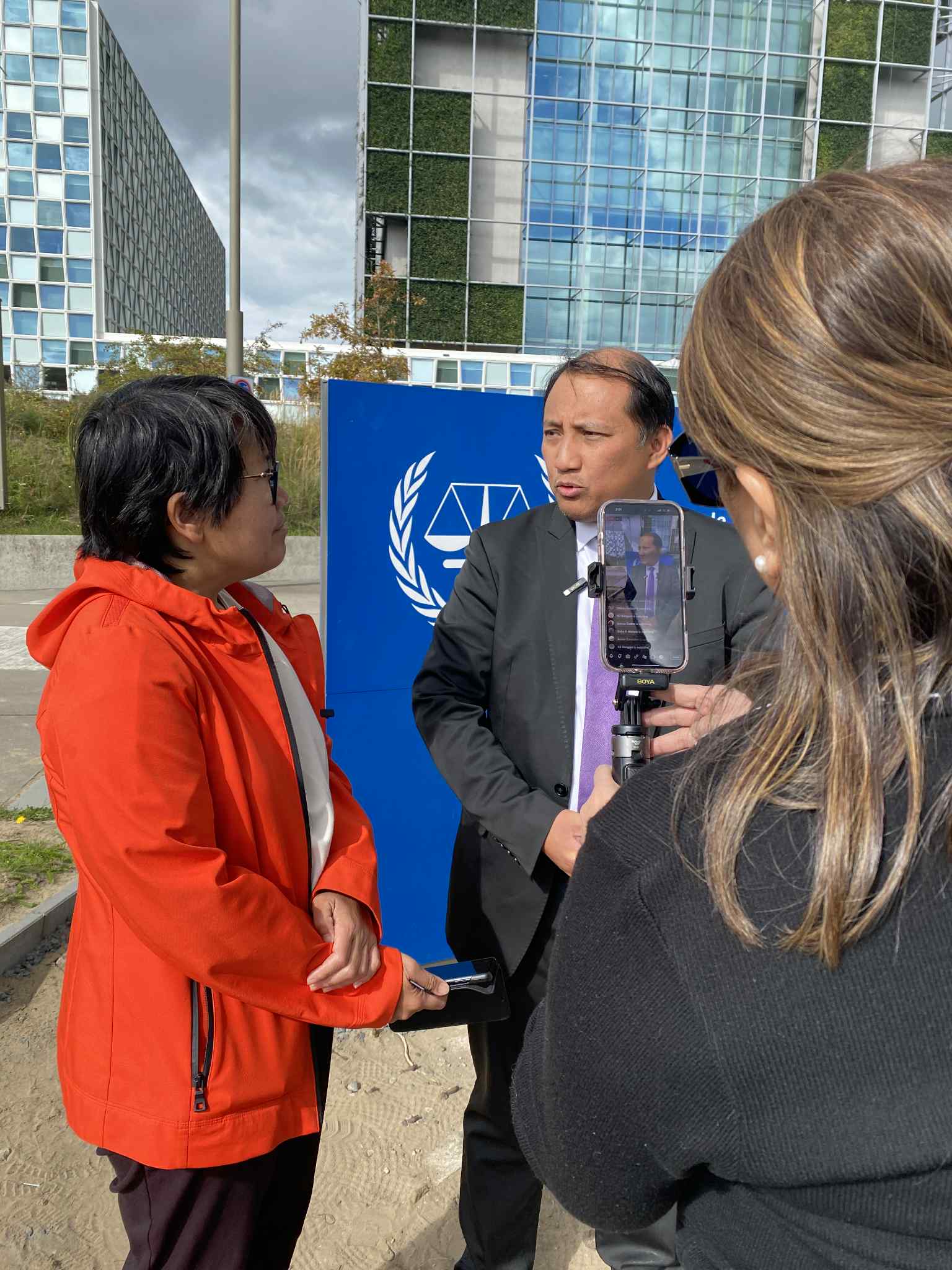
In photo: Lawyer for the victims, Atty. Gilbert Andres, being interviewed by TFCN Correspondents outside the ICC
It is not certain if the defense side has filed a reply on the DCC. Regarding the confirmation of charges, the hearing is still up to the judges, according to ICC spokesperson El Abdallah. ¨It's about the full respect of the rights of everyone.I do trust that victims want the truth to be revealed. They just don't want the conviction of a wrong person who was not guilty. They want, if someone is innocent, to be declared innocent. And if he or she are guilty, thenthey are declared guilty. And that can be guaranteed only with the full respect of the rights ofthe defense, including the presumption of innocence, including a whole set of rights of thedefense, and also the rights of the victims,¨ he said.
The charges by the prosecutions, the request for halting the proceedings by the defense and other filings are decided by the judges. ¨It is for the judges to decide on the requests that are submitted either by the prosecutionor by the defense, or also by the representative of the victims. The judges are the only oneswho have the full picture, because as you know, there's a lot of information that is not revealedpublicly, especially if an information is related to the private life of someone, to the privatehealth condition of someone,¨ El Abdallah commented.

In photo: ICC Spokesperson Fadi Ed Abdallah with TFCN Correspondents
For now, the Filipinos remain divided, not just on the issue of the legacy of Duterte but also on other issues tied to corruption, poverty, and politics.
Photos: RCEM, Rachel Salinel, Jofelle Tesorio
