


Truth Commission launched to probe, document extrajudicial killings in the Philippines
MANILA (May 27, 2026) — A Truth Commission, an independent, civilian-led body to document extrajudicial killings during the “war on drugs," was formally launched Wednesday, May 27.
Its role will center on survivors, and recommend accountability, reparations, institutional reform, and safeguards against recurrence.
In a press release, the convenors said that
"the creation of the Truth Commission comes as the Philippines marks nearly a decade since drug war-related killings escalated nationwide in 2016 at the start of the Duterte presidency. The commission recognizes that while the violence did not begin in 2016, the scale, persistence, and targeted killings in recent years have left thousands of families still seeking truth, justice and healing."
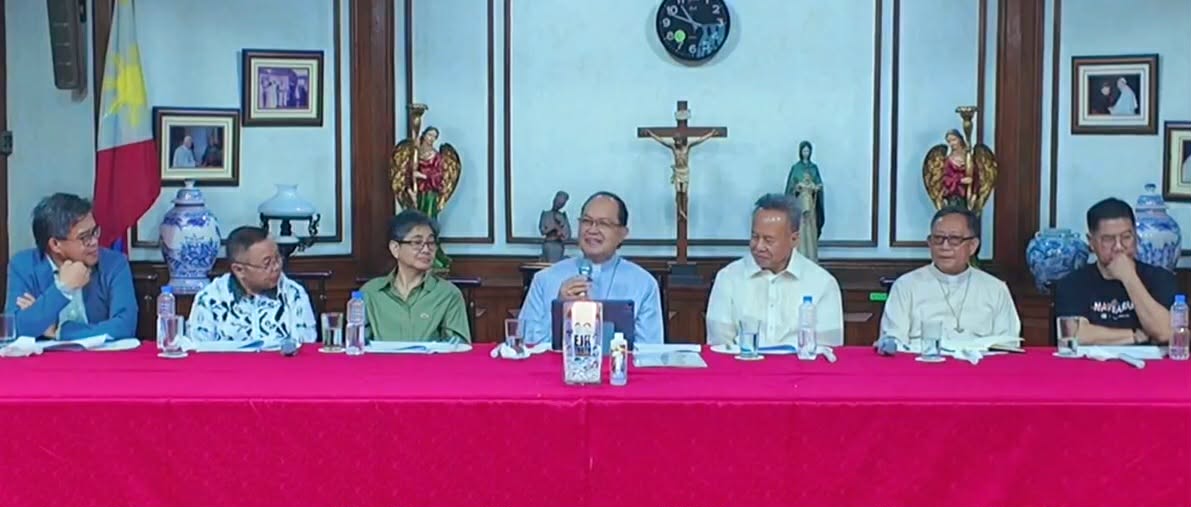
Cardinal Pablo “Ambo” David will serve as Adviser - an independent moral and institutional guide to help safeguard the integrity, independence, and mission of the commission, particularly in relation to truth-seeking, due process, survivor protection, confidentiality, public trust, and institutional independence - according to a statement.
Meanwhile, former International Criminal Court Judge Raul Pangalangan will serve as Commissioner for Legal Affairs and Due Process. He will help safeguard due process, ethical standards, and the legal integrity of the Truth Commission’s processes and outputs.
“The Truth Commission was created to ensure that the stories of victims, survivors, and families are heard, verified, and preserved. This is not about replacing the courts or assigning guilt. It is about building a credible truth record that can guide accountability, healing, reform, and the prevention of future violence,” said Atty. Pangalangan.
Other civilian commissioners representing distinct areas of expertise, will also be part of the Commission such as Dr. Raquel Barros del Rosario-Fortun (Commissioner for Forensic Sciences and Independent Investigation). She will help advance credible fact-finding standards, forensic review protocols, and evidence protection.
Dr. Al Fuertes (Commissioner for Psychosocial Support and Trauma Healing) will guide trauma-informed practice, survivor protection, psychosocial protocols, and healing and recovery support.
Fr. Daniel Franklin E. Pilario, CM, (Commissioner for Church and Education, Truth Literacy, and Institutional Reform) will help lead truth literacy, prevention strategies, public education, and institutional reform recommendations.
Lastly, Carlos Conde (Commissioner for Public Documentation, Transparency, and Democratic Accountability) will help set standards for public documentation, reporting, accessibility, transparency, and non-partisan public communication.
Conde will also serve as the Executive Director for the Truth Commission.
The commissioners will provide civilian leadership and overall strategic direction for the Truth Commission. Their responsibilities include approving policies and standards, convening and chairing National Truth Hearings, adopting findings and reports, authorizing referrals and recommendations, and leading public engagement—while ensuring the Commission remains independent from government influence.
A central component of the Commission’s mandate is the conduct of Public Truth Hearings. These may be public, semi‑public, closed, anonymized, or representative, depending on survivor consent, safety considerations, and risk assessments. All hearings will follow non‑adversarial procedures and survivor‑centered safeguards, aiming to document lived experiences, institutional patterns, historical context, and the social impacts of violence in a safe and dignified setting.
Participants may include victims and survivors, affected families, community representatives, witnesses, former participants in violence, institutional leaders, government officials, subject‑matter experts, academics, historians, researchers, psychosocial practitioners, faith leaders, civil society organizations, and members of the media. Participation will be governed by informed consent, confidentiality protocols, and survivor‑protection measures.
The Commission will also prepare referral‑ready case packages and evidence‑based recommendations for relevant institutions. These may include oversight bodies and agencies such as the Commission on Human Rights, the National Police Commission (Napolcom), the Department of Justice, the National Bureau of Investigation, and other lawful recipient institutions, while upholding the Commission’s independent civilian role.
