



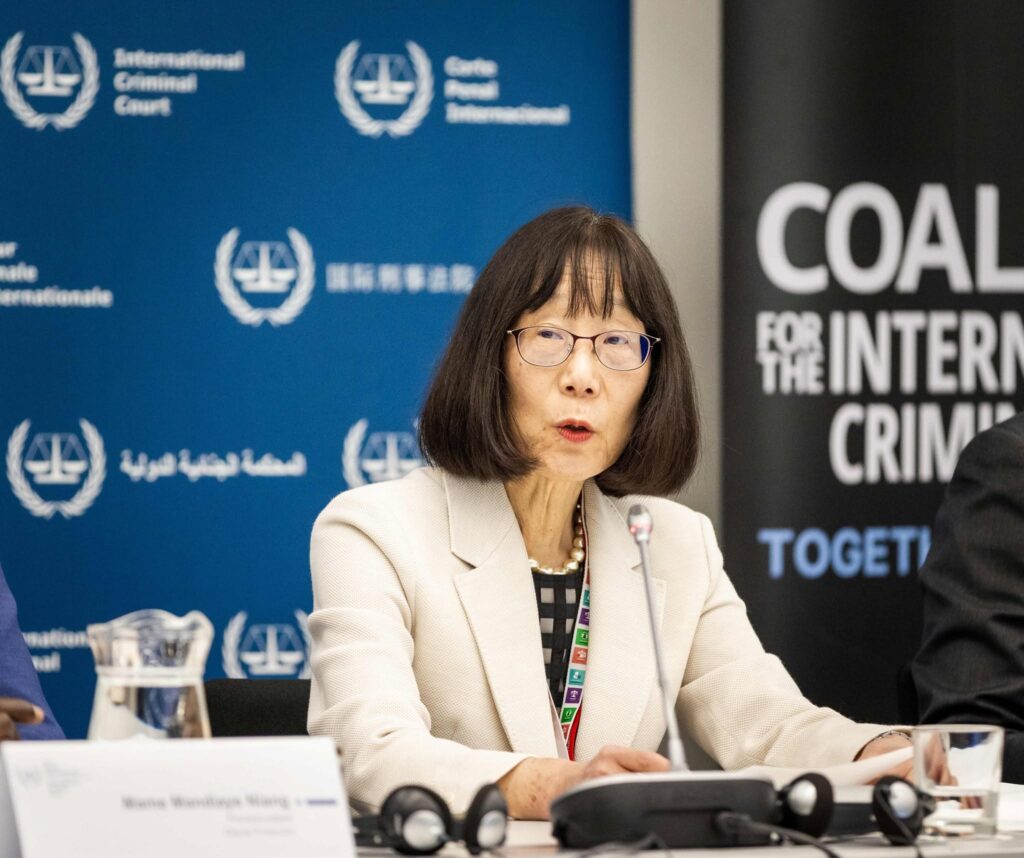
US Sanctions First Japanese ICC President Tomoko Akane
Cover image: ICC
The United States has imposed sanctions on Tomoko Akane, the first Japanese national to serve as President of the International Criminal Court (ICC), with President Donald Trump's administration accusing the Hague-based judicial body of encroaching on state sovereignty.
Secretary of State Marco Rubio stated that the ICC is a "corrupt and fatally politicized supranational court that has maliciously abused its authority and exceeded its mandate". Along with Akane, a former prosecutor from Japan who began her three-year term as ICC President in 2024, the U.S. also sanctioned Senegal's Abdoulaye Seye, a senior trial lawyer at the court.
Adding Akane and Seye to its list of sanctioned officials, Washington claimed both individuals have been involved in court efforts to investigate, arrest, or prosecute officials whose governments have not consented to its jurisdiction. The measures freeze any assets the targeted officials hold in the U.S. and restrict their access to the U.S. financial system.
The Trump administration strongly objects to ICC probes into alleged war crimes by U.S. military personnel and has urged other nations to join its campaign against the tribunal. Rubio noted that the administration "stands ready to take additional measures, if necessary, to systematically dismantle the ICC until it is incapable of threatening American sovereignty". Out of the ICC's 18 judges, the U.S. has now sanctioned nine.
International and Regional Responses
Japan: Foreign Press Secretary Toshihiro Kitamura stated it is "extremely regrettable" that the U.S. imposed sanctions on Akane. He noted that Japan has "consistently supported" the court to "ensure the punishment and eradication of the most serious crimes for the international community and the rule of law".
The ICC: Denouncing the sanctions, the ICC stated that the measures "undermine the rule of law". Reaffirming its commitment to independence and impartiality, the tribunal stated it "remains undeterred and stands firmly behind its personnel and behind victims of unimaginable atrocities".
The Netherlands: Dutch Foreign Minister Tom Berendsen expressed that the Netherlands "disapproves" of the sanctions, reaffirmed full support for the court and its staff, and invited Akane to discuss continued backing.
Broader Context
In February 2025, President Trump signed an executive order targeting the tribunal over alleged "illegitimate and baseless actions" against the U.S. and its ally Israel. The ICC has previously issued arrest warrants for Israeli Prime Minister Benjamin Netanyahu and former Defense Minister Yoav Gallant over alleged war crimes and crimes against humanity in the Gaza Strip. Netanyahu denied the charges, accusing the court of antisemitism.
The United States is not a member of the court, which was established in 2002 in the Netherlands, and does not recognize its jurisdiction over U.S. nationals. The ICC comprises 125 member states and serves as the only permanent international court empowered to prosecute individuals for genocide, war crimes, and crimes against peace and humanity.


