



Uwan Death Toll Rises As Tino Recovery Gains Momentum
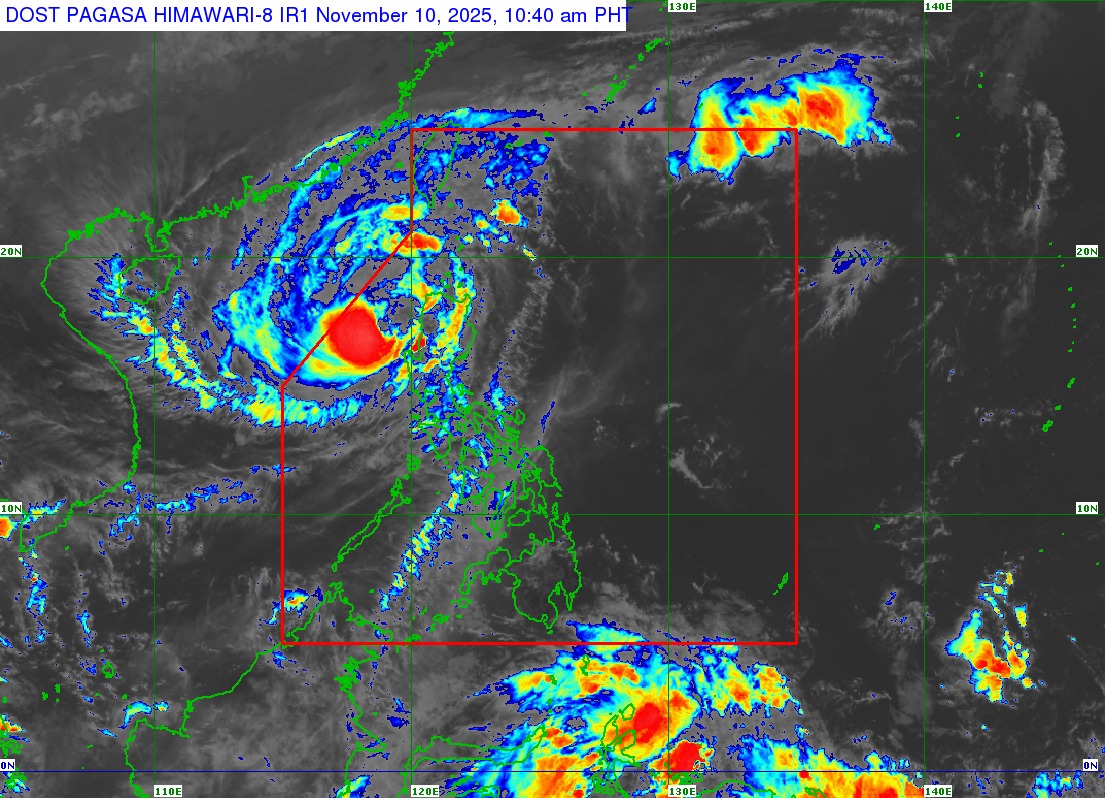
MANILA—Relief operations are underway across the Philippines to restore basic services and provide aid in provinces hardest hit by Super Typhoon Uwan (international name: Fung-wong).
The Office of Civil Defense (OCD) reported a significant increase in the death toll due to Uwan, which now stands at 18 confirmed fatalities as of 11 November 2025. The supertyphoon displaced approximately 2.4 million individuals (or 653,000 families) across multiple regions.
The province of Catanduanes was identified as the hardest-hit area. Severe damage to the water system could take 15 to 20 days to fully restore according to the authorities. The province is also experiencing widespread power outages, prompting the Task Force Energy Resiliency to fast-track restoration efforts.
Meanwhile, Aurora province has been placed under a state of calamity, particularly the town of Dinalungan, where the storm made landfall. Residents of coastal communities, such as Barangay Abuleg, reported that storm surges swallowed entire homes, with some areas still lacking telecommunication signals and electricity supply as of 12 November.
The Department of Education (DepEd) also reported catastrophic damage to learning facilities, with over 1,800 classrooms in at least 312 schools affected nationwide. This includes 261 classrooms that were completely destroyed.
Around 10,000 family food packs have already been sent to Catanduanes by the Department of Social Welfare and Development (DSWD) to support the displaced families currently sheltered in over 11,000 evacuation centers. The Philippine National Police (PNP) has also assured continuous disaster response and security operations in affected areas.
Supertyphoon Uwan's impact follows closely after the sweep of Typhoon Tino (Kalmaegi) across the Visayas and Mindanao. Recovery efforts for Tino, which struck one week prior, are shifting toward infrastructure resilience and housing reconstruction.
The latest official data reports 204 deaths and 109 missing individuals as of 8 November 2025. The storm affected over 2.2 million Filipinos and resulted in agricultural losses estimated at over ₱10.6 million.
The scale of housing destruction is staggering, with Negros Occidental reporting at least 48,290 houses damaged across 16 local government units due to flash floods and strong winds.
Following the declaration of a State of National Calamity on 6 November, the Office of the President immediately released substantial financial assistance to various affected provinces including Cebu, Capiz, Surigao del Norte, and Negros Occidental amounting to ₱760 million.
In a significant development, the Department of Public Works and Highways (DPWH) announced it will begin implementing the long-shelved 2017 flood control masterplan for Cebu. This decision comes after Typhoon Tino caused unprecedented flooding in Cebu City, where it dumped 140% above the monthly average rainfall in 24 hours. The plan is hoped to prevent future catastrophes in the highly urbanized province, which accounted for a large portion of Tino’s casualties.
Relief agencies continue to prioritize aid distribution to the survivors in regions where communities were heavily flooded and isolated.
