



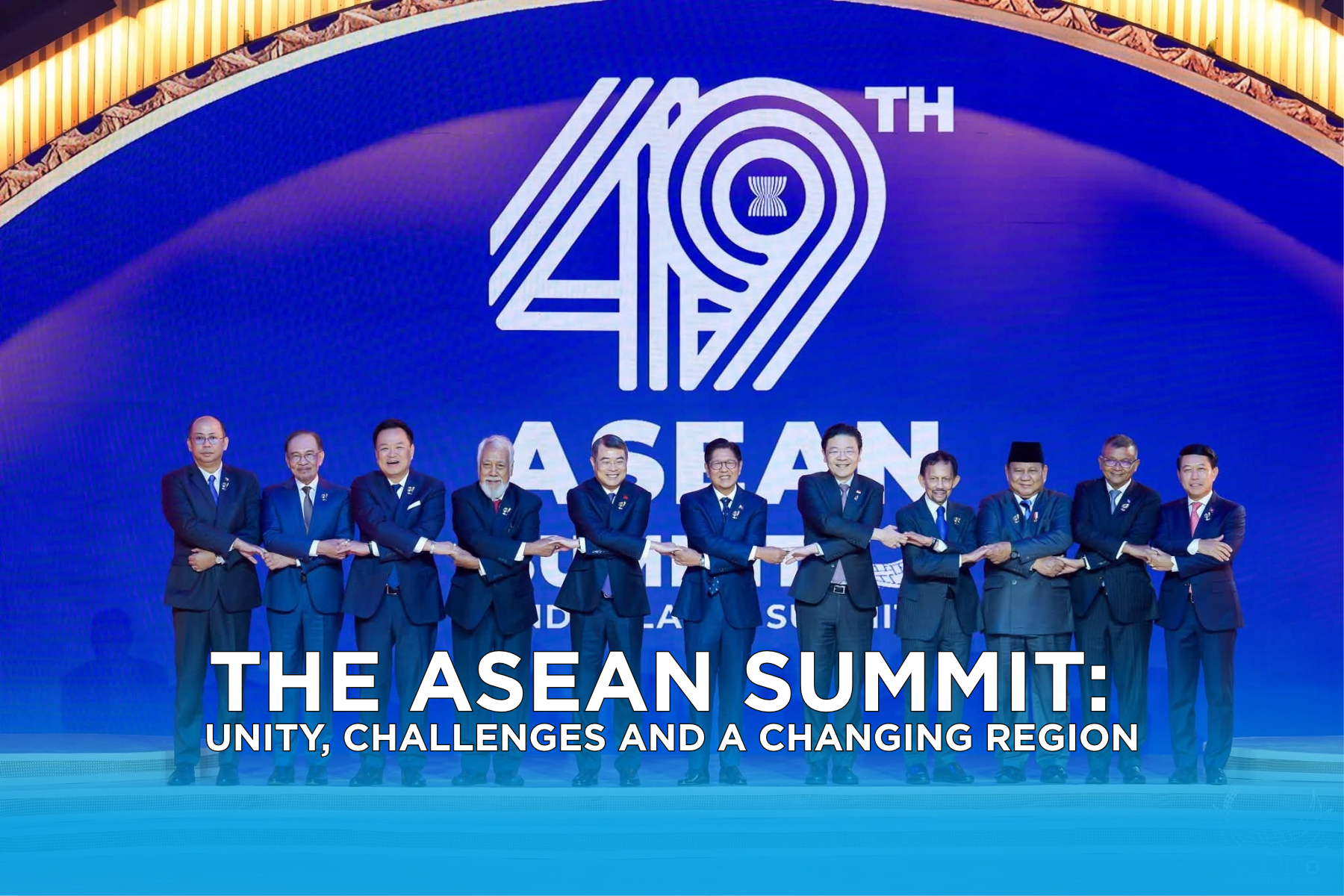
ASEAN SUMMIT 2026: Shaping Southeast Asia's Future
Leaders gather to shape the future of Southeast Asia amid shifting alliances, economic pressures and regional challenges.
MANILA — The Philippines closed its year as ASEAN chair on 17-11-2026 with two very different images of Southeast Asia's place in the world.
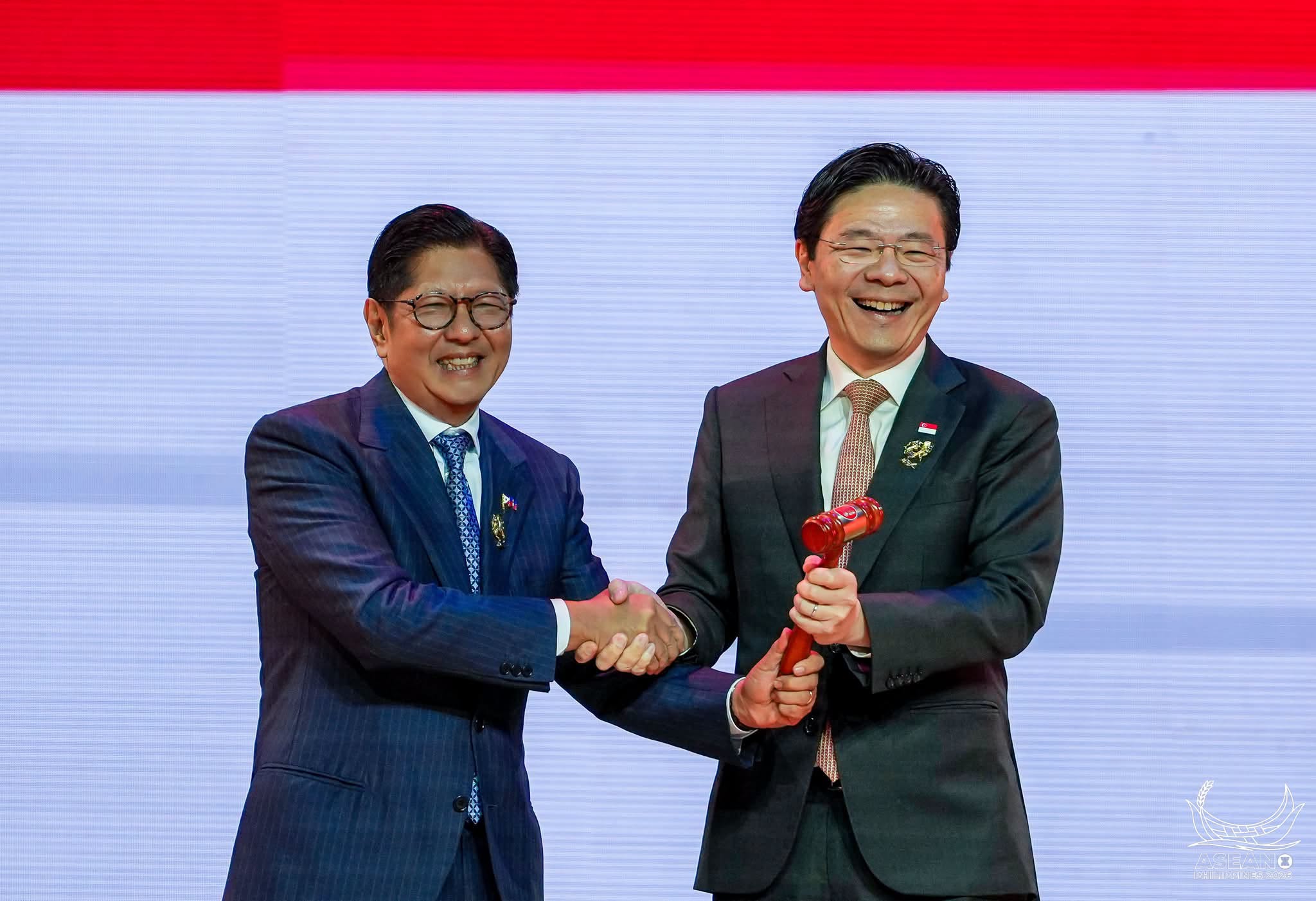
Inside the summit, President Ferdinand Marcos Jr. formally handed the ASEAN gavel to Singapore Prime Minister Lawrence Wong, closing a Philippine chairmanship that produced a string of economic, digital and energy initiatives.
But as the regional bloc was wrapping up, the most closely watched external power finally arrived.
US President Donald Trump touched down at 5:33pm — essentially at the end of the main ASEAN programme — turning what was supposed to be the closing chapter of the Philippines' ASEAN chairmanship into a highly visible US-ASEAN and US-Philippines finale.
That timing matters.
Trump did not participate in the bulk of the ASEAN leaders' deliberations. The Philippines had already completed its substantive summit programme and the handover to Singapore was under way before his arrival. The US president's principal ASEAN engagement was therefore the special US-ASEAN meeting that followed, rather than the main three-day leaders' discussions.
It gave the summit an unusual ending: ASEAN was finishing its business, while Washington was arriving for its own conversation with the region.
And that contrast perhaps says as much about ASEAN's strategic predicament as any declaration issued in Manila.
A Philippine chairmanship with tangible deliverables
Marcos can point to a substantial list of outcomes as he passed the chairmanship to Wong.
The biggest economic achievement was the completion of the ASEAN Digital Economy Framework Agreement (DEFA). ASEAN describes the agreement as a major step towards an open, secure, interoperable and inclusive regional digital economy, with entry into force expected in early 2027.
For Manila, DEFA became an important piece of the legacy narrative.
Marcos called it one of the Philippines' major achievements, arguing that ASEAN should not merely consume technologies developed elsewhere.
"We do not accept that ASEAN should just be customers to the AI revolution, but that we should be part of guiding the directions in which that development will take place."
That is more than an economic argument. It is a statement about agency.
Southeast Asia is increasingly caught between competing technological ecosystems dominated by the US and China. DEFA gives ASEAN an attempt at establishing common regional rules for cross-border e-commerce, data and digital payments rather than allowing each member state to navigate the digital economy independently.
Whether that eventually becomes transformative will depend less on the signing ceremony than on implementation.
That is the recurring question surrounding ASEAN agreements: can the bloc turn consensus into integration?
From talking about an ASEAN Power Grid to actually building connections
Energy was another area in which the Philippines could claim concrete progress.
ASEAN members advanced the enhanced memorandum of understanding for the ASEAN Power Grid, providing the institutional and regulatory basis for greater cross-border electricity connectivity.
Then Marcos announced something considerably more tangible: plans for the first undersea power cable linking Sabah in Malaysia and Mindanao in the Philippines.
> "I am happy to report that the first undersea cable for sharing of energy is going to be laid between Malaysia, Sabah in particular, and Philippines, in Mindanao."
That matters for the Philippines because energy security is no longer simply an economic issue. It is increasingly a strategic one, particularly as Southeast Asian economies confront supply disruptions and volatility in global energy markets.
The Sabah-Mindanao connection also carries symbolic weight. ASEAN has spent years discussing regional connectivity; an undersea electricity link is a physical manifestation of that idea.
The challenge, again, is execution.
The big geopolitical problems remain unfinished
And this is where the celebratory narrative needs qualification.
The Philippines did not finish the South China Sea Code of Conduct during its chairmanship.
Marcos said negotiations were now about 85% to 90% complete, with definitions of terms and other provisions still requiring agreement.
That is substantial progress, but it is not a completed agreement.
The distinction matters particularly for Manila.
The Philippines had hoped to use its chairmanship to push the negotiations towards a conclusion, but the Code will now pass to Singapore's chairmanship.
Marcos acknowledged that reality:
"We had, of course, hoped that during the chairship of the Philippines, that we would be able to announce that the COC was finished."
Instead, the next phase will belong to Singapore.
For the Philippines, this is perhaps the most obvious example of the limits of the chairmanship. A chair can push, convene and broker. It cannot force consensus among ASEAN's members or between ASEAN and China.
And the remaining issues are not merely grammatical ones. Definitions and provisions in a South China Sea code can have consequences for the rights and obligations of claimant states, the scope of the agreement and its relationship with international law.
So "85%-90% complete" should be read as significant diplomatic progress, not a near-finished geopolitical settlement.
Myanmar: ASEAN has adjusted, but not solved, the problem
Myanmar presents an even harder test.
ASEAN agreed to maintain Myanmar's exclusion from political representation at its summits and foreign ministers' meetings for now. But it also created a possible route back: if Myanmar demonstrates "sustained and concrete" progress in implementing ASEAN's Five-Point Consensus, the bloc may gradually restore full political representation.
That is a change in emphasis rather than a breakthrough.
ASEAN is effectively saying: the door is not permanently closed, but Myanmar has to demonstrate progress before it can walk through it.
The decision also reflects the bloc's characteristic preference for incremental engagement over confrontation.
It allows members that favour greater engagement with Myanmar to pursue it while preserving the collective position on political representation.
But the fundamental problem remains: ASEAN has not found a mechanism capable of compelling an end to the violence or producing a political settlement.
In that respect, Myanmar remains the clearest illustration of ASEAN's institutional limitations.
Timor-Leste changes the picture
There was also a quieter but historically important development: Timor-Leste took part in the summit as ASEAN's 11th member.
Its admission in October 2025 completed a process that had begun with its application in 2011 and turned ASEAN from a 10-member bloc into an 11-member one.
That gives the Philippines' chairmanship another important legacy.
ASEAN is not merely dealing with its existing problems; it is also expanding its institutional family.
But Timor-Leste's integration will take time. Membership brings participation across ASEAN's political-security, economic and socio-cultural structures, and the country's capacity to participate fully in the enormous volume of regional mechanisms will be an ongoing process.
For ASEAN, however, the message is significant: the bloc remains an attractive regional institution despite all its limitations.
Then came Trump
The most striking feature of the final day was therefore not what Trump said.
It was when he arrived.
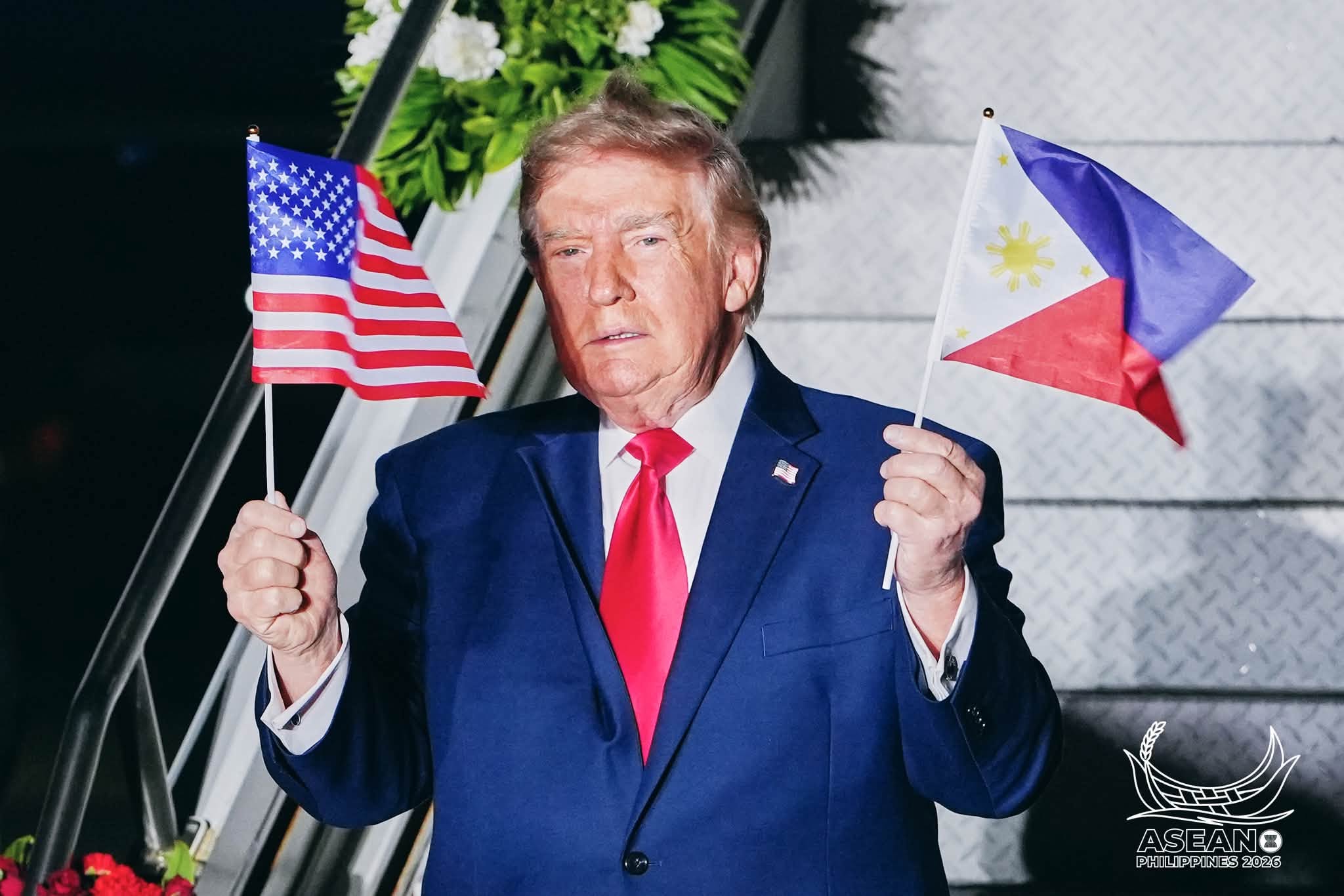
The US president landed at 5:33pm, after ASEAN's principal leaders' proceedings had largely concluded. The Philippines' Foreign Affairs officials had made clear beforehand that the ASEAN programme would not be delayed by his late arrival.
That meant ASEAN effectively had two tracks.
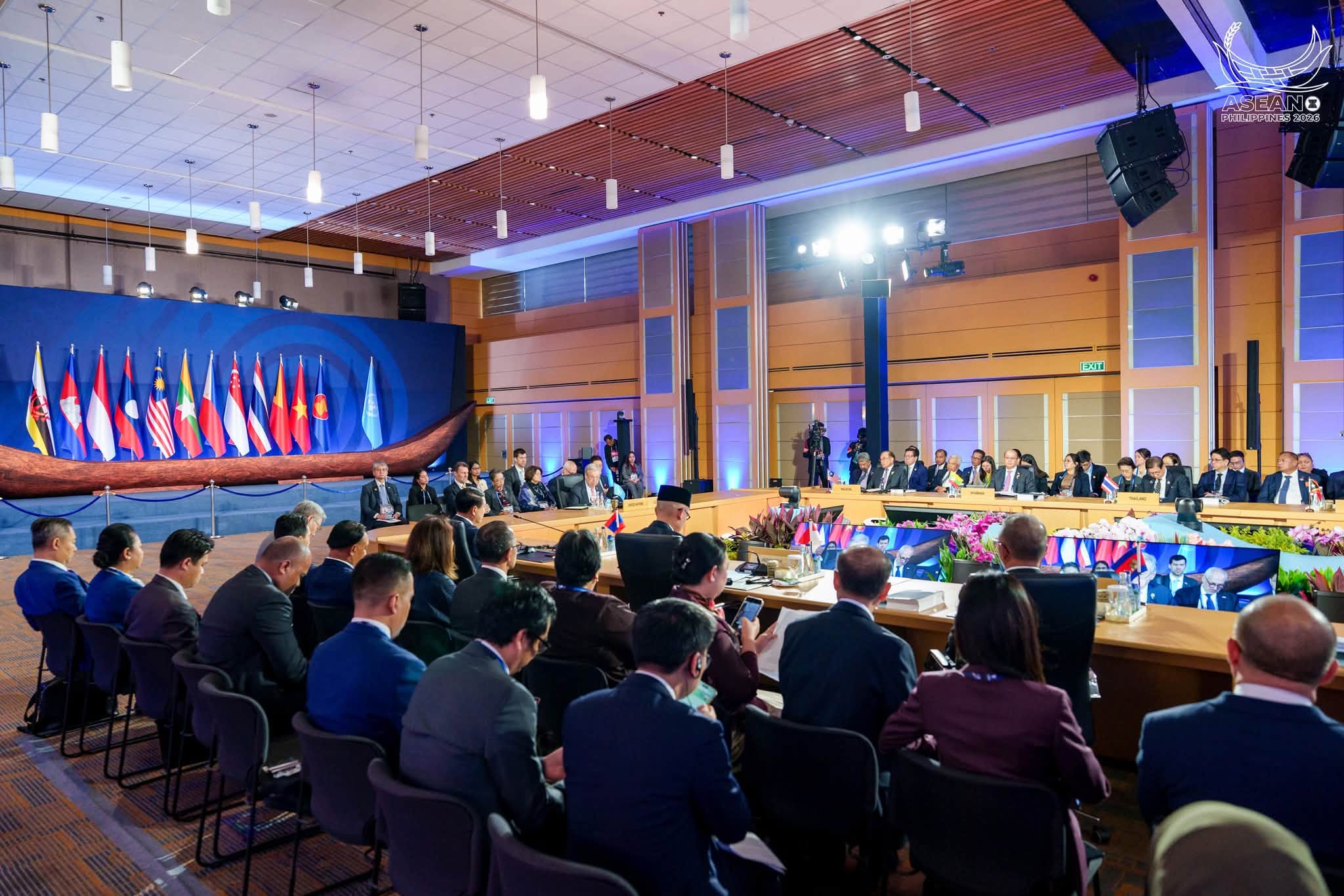
There was the ASEAN track, where leaders had spent days negotiating digital integration, energy, Myanmar, the South China Sea and regional resilience.
And there was the great-power track, in which Trump arrived for a concentrated engagement with ASEAN and Marcos.
The juxtaposition was almost too neat.
ASEAN wants to maintain centrality — to ensure that Southeast Asia remains the place where the major powers come to engage the region.
Trump's schedule demonstrated both the value and the difficulty of that ambition.
He could arrive late and still command enormous attention.
Trump made the Philippines-US relationship personal
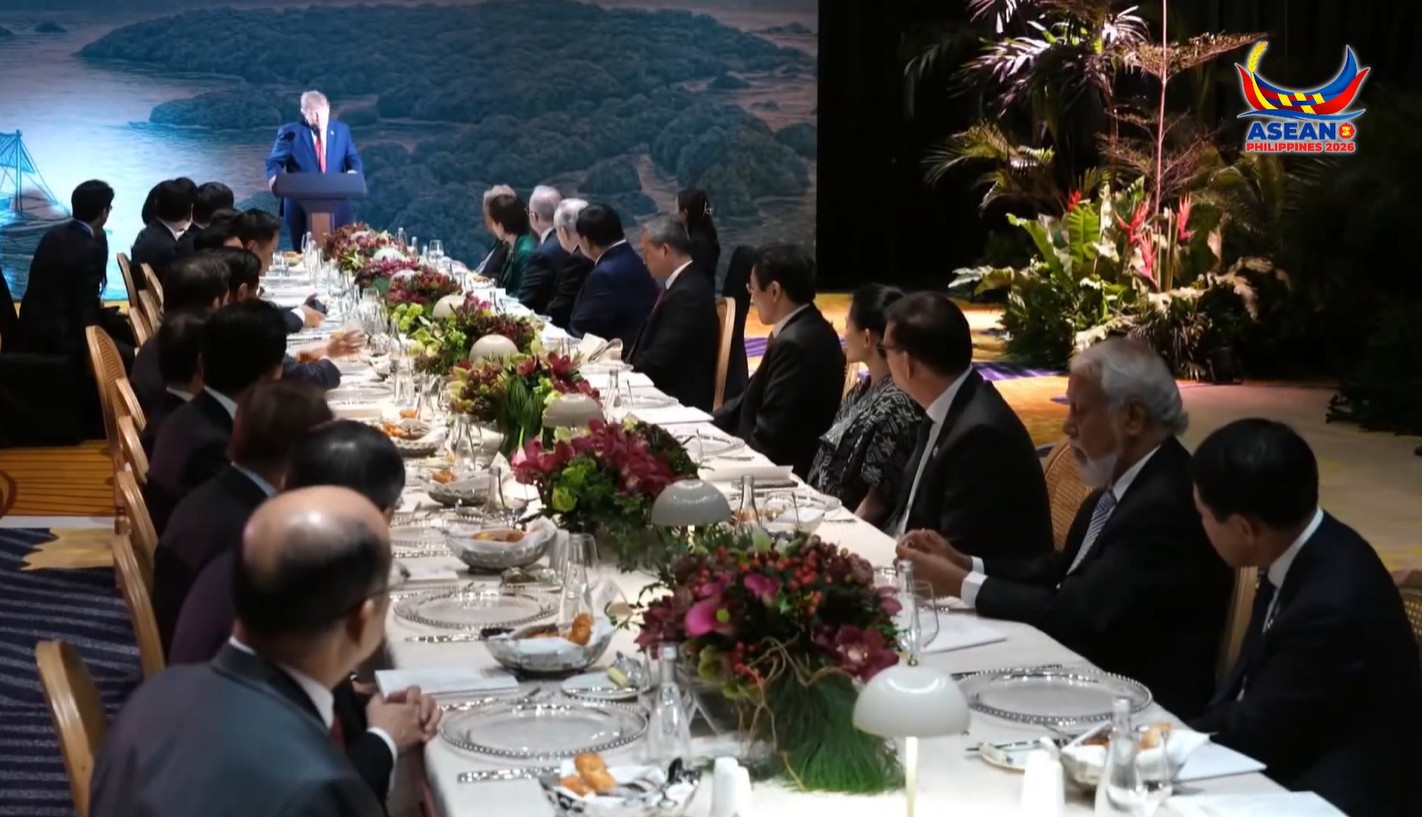
When Trump finally sat down with ASEAN leaders, his message was strikingly personal.
Addressing Marcos, he said:
"I don't think we've ever been closer than we are right now because of our personal relationship."
He then offered an unusually direct assurance to US partners:
"And when there's a problem, you'll call me."
And, in a typically Trumpian aside about Secretary of State Marco Rubio, he joked that if Rubio did not respond quickly enough, the leaders could call Trump directly.
"If they don't respond, call me. I'll take your call."
The remarks were not a formal strategic doctrine. But they were politically significant.
Trump was effectively presenting the US relationship not simply as an institutional alliance but as one backed by his personal availability and relationship with allied leaders.
For Marcos, that was useful.
The Philippines has spent much of the past several years strengthening its security relationship with Washington while simultaneously trying to preserve ASEAN centrality and manage its increasingly difficult relationship with China.
Trump's words provided Marcos with a public reaffirmation of US commitment.
But they also underscored something more complicated: ASEAN's collective diplomacy and the Philippines' bilateral alliance with Washington are not necessarily the same thing.
The anti-scam agreement may be more consequential than the theatrics
The most concrete outcome of the ASEAN-US meeting was not Trump's speech.
It was the agreement on online scams.
Marcos announced that ASEAN and the US had adopted 10 public-private partnership principles and a comprehensive work plan to combat online scams. He called it an "immediate result" of the special summit.
That is particularly relevant to Southeast Asia.
Online scam networks have become a major transnational criminal problem, crossing borders, exploiting digital financial systems and involving organised operations that are difficult for individual governments to tackle alone.
The agreement therefore fits ASEAN's broader move towards practical cooperation on transnational crime.
It is also politically useful for Marcos.
Rather than allowing the Trump visit to become entirely about defence, alliances and geopolitical rivalry, Manila could point to a concrete regional initiative that affects ordinary people.
The test, however, will be implementation.
A set of principles is not the same thing as dismantling scam centres, recovering stolen funds or prosecuting the networks behind them.
And what about Pax Silica?
One of the most anticipated announcements surrounding Trump's visit never happened.
There was no Pax Silica announcement at the ASEAN summit.
US Ambassador Lee Lipton had already said before the summit that no announcement was scheduled and that decisions would be made in consultation with the Philippine government.
That is significant because Pax Silica had generated controversy in the Philippines, including protests surrounding the proposed initiative.
The absence of an announcement therefore leaves the issue unresolved rather than settled.
It also illustrates the difference between what is strategically important and what is politically ready to announce.
Washington clearly regards advanced technology, supply chains and AI as strategic priorities. Manila is interested in investment and technology but has also been dealing with questions about sovereignty, environmental impacts and the terms of any proposed development.
The summit was therefore not the moment when those differences disappeared.
Singapore inherits the unfinished agenda
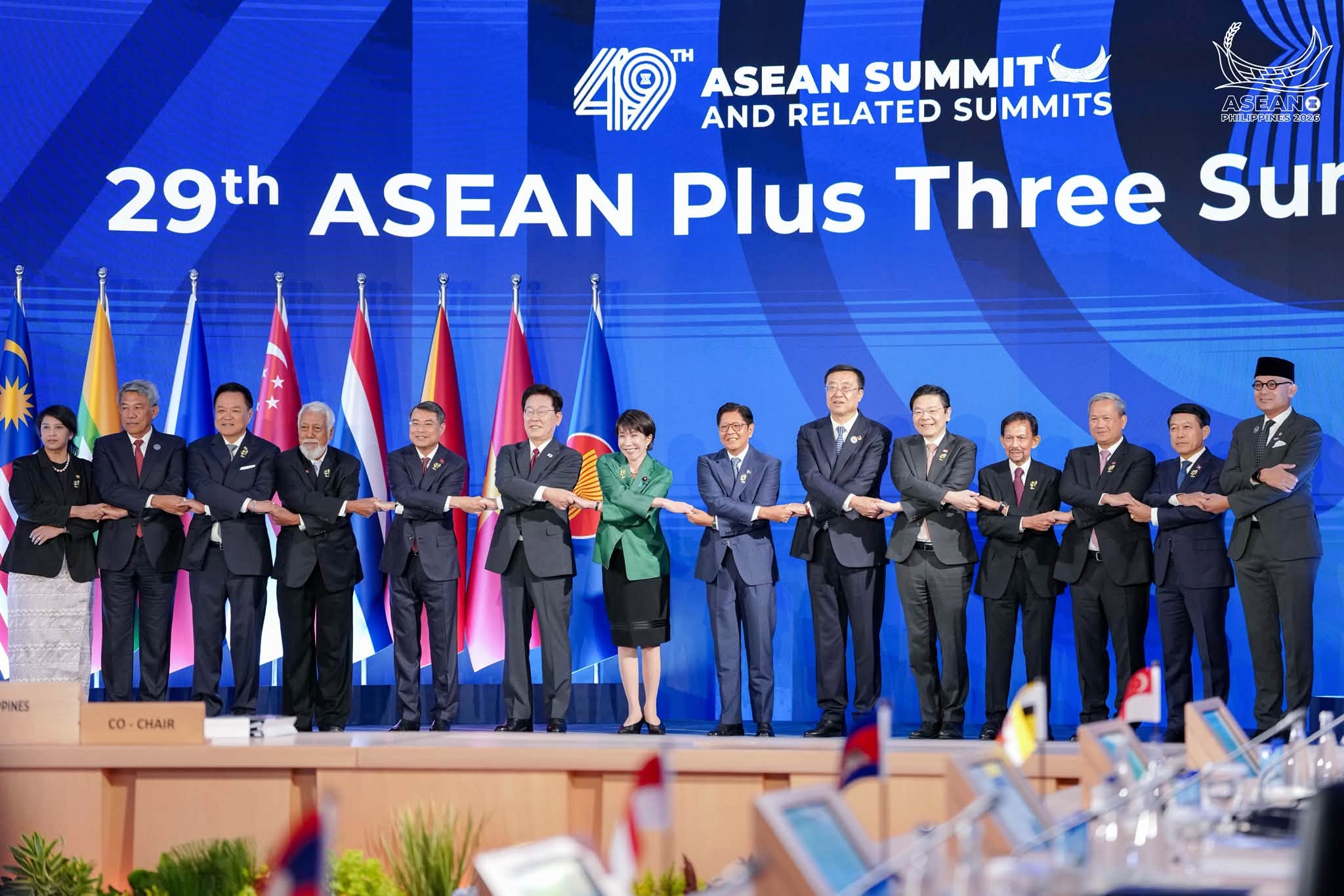
At the closing ceremony, Marcos formally handed the ASEAN chairmanship to Wong.
Singapore takes over on 1 January 2027, the year ASEAN marks its 60th anniversary, under the theme "Deeper Integration, Wider Partnerships."
That theme is revealing.
"Deeper integration" points inward — towards completing the work of ASEAN economic and institutional integration.
"Wider partnerships" points outward — towards ASEAN's relationships with the US, China, Japan, India, Australia, South Korea and other powers.
Singapore therefore inherits an ASEAN that is simultaneously trying to become more integrated and more strategically independent.
That will not be easy.
The bloc needs Chinese trade and investment. It values the American security presence. It wants Japanese, Korean, Indian, Australian and European engagement. And it wants all of this without becoming an arena in which Southeast Asian countries are forced to choose sides.
Trump's late arrival in Manila provided an unusually vivid illustration of that balancing act.
The bigger verdict on the Philippine chairmanship
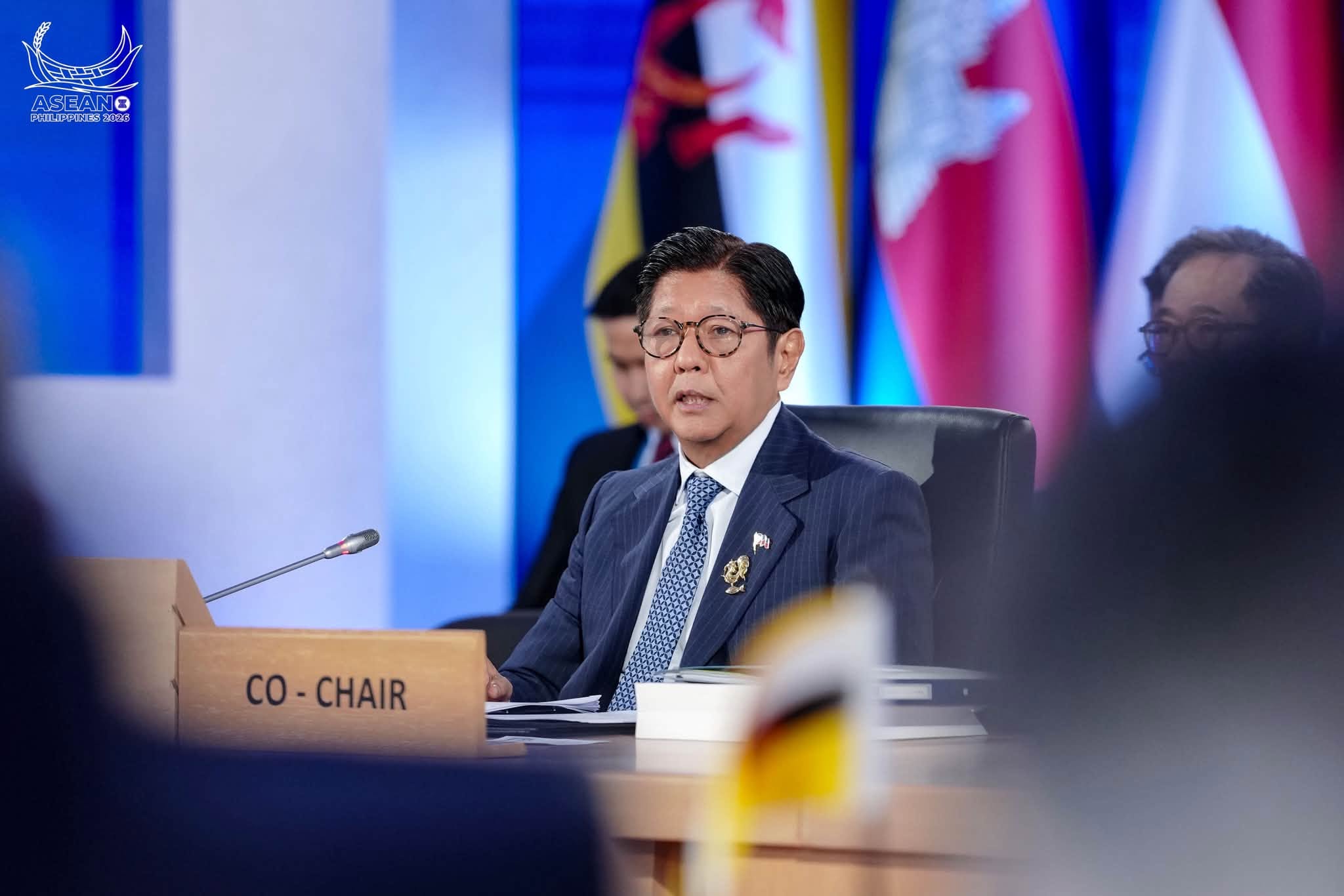
If the Philippines' 2026 chairmanship is judged purely by the number of agreements produced, the government has a strong case.
There was DEFA.
There was progress on the ASEAN Power Grid.
There was movement on energy security.
There were new mechanisms for disaster response and digital cooperation.
There was the integration of Timor-Leste.
There was also the online-scams initiative with the US.
Marcos has cited more than 100 outcome documents from the chairmanship.
But if the chairmanship is judged by ASEAN's most difficult political problems, the assessment is more mixed.
The South China Sea Code of Conduct remains unfinished.
Myanmar remains unresolved.
ASEAN's strategic balancing between China and the US remains a work in progress.
And Trump's arrival — just as the ASEAN leaders were finishing — offered a potent reminder that the region's largest strategic questions are increasingly shaped by forces outside ASEAN's control.
That does not make the Philippine chairmanship a failure.
Quite the opposite: its strongest achievements were in areas where ASEAN can actually build consensus — digital rules, connectivity, energy, resilience and practical cooperation.
Its biggest unfinished tasks were precisely those requiring the bloc to reconcile fundamentally different strategic interests.
That may be the most honest way to assess the Manila summit.
The Philippines succeeded in leaving ASEAN with more machinery for cooperation.
It did not leave ASEAN with solutions to all its geopolitical problems.
And perhaps the most revealing image of the entire summit was the handover itself: Marcos passing the gavel to Wong while Trump was only just arriving.
The symbolism was hard to miss.
ASEAN's work continues — but the great powers will continue to shape the environment in which that work is done.
Photos: ASEAN 2026 PH Facebook


