



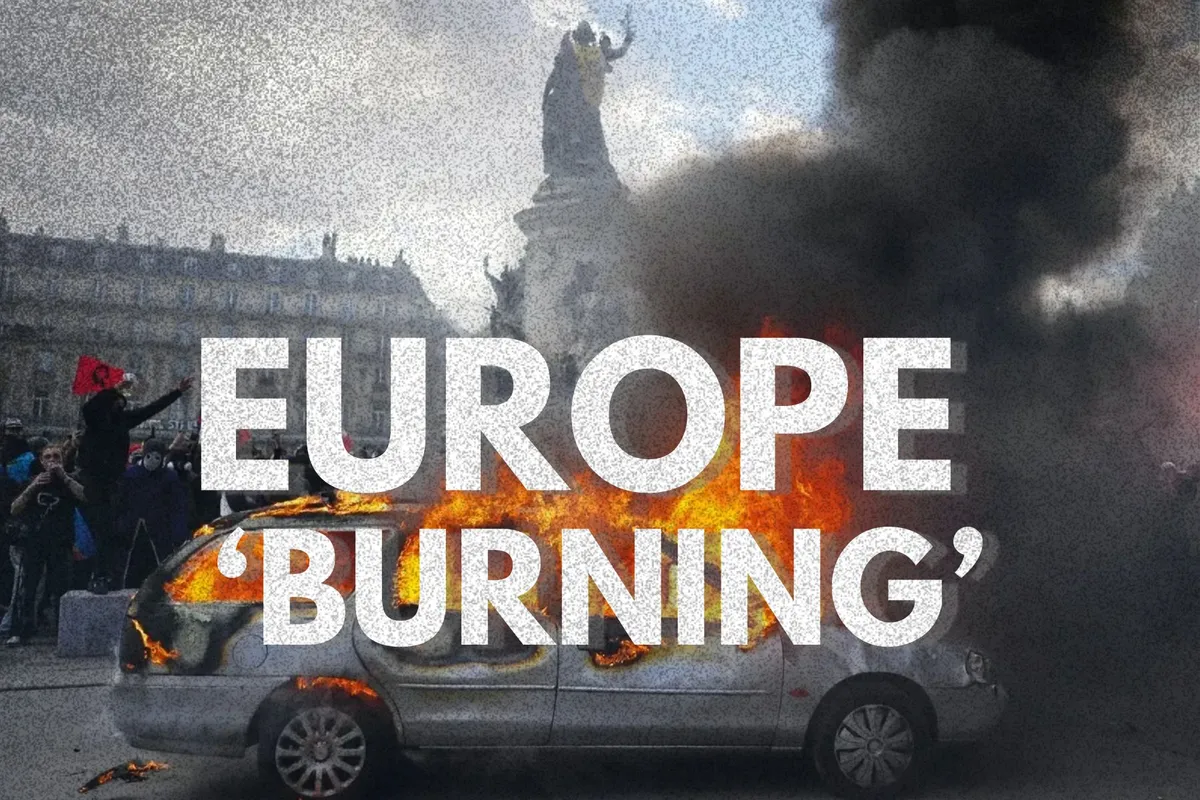
Europe’s Burning Cities: How Local Crises Turned Into Urban Rage
A wave of street unrest, opportunistic looting, and violent property destruction has flared across several major European urban centers. While media narratives often group these events together as a singular, unified European uprising, a factual breakdown reveals a more complex reality:a series of locally rooted socioeconomic crises that share structural vulnerabilities, exploited by violent opportunistic factions and extremist groups.
The Underlying Drivers: Fractured Socioeconomic Foundations
The widespread unrest is not stemming from a single central command, but rather from a convergence of domestic grievances across Western Europe.
France (Paris, Marseille, Lyon): Cost of Living & Public Services
The French unrest originated from broad mobilizations over public service decay, particularly a weeks-long student and high schooler movement protesting underfunded, dilapidated schools. This quickly expanded when major trade unions (such as the CGT) joined, uniting student grievances with broader worker anger over inflation, declining purchasing power, and cost-of-living pressures.
Italy (Milan, Turin, Rome): Economic Stagnation & Geopolitics
Demonstrations in Italian industrial centers began as protests targeting rising household costs, low wage growth, and opposition to government fiscal policies and foreign military spending.
Spain (Barcelona, Madrid): The Housing Crisis
In Spain, the core catalyst has been hyper-inflated urban housing costs. Following high-profile evictions and unaffordable rents relative to the minimum wage, encampments formed in major squares (such as Madrid's Puerta del Sol). In Barcelona, long-standing tensions surrounding overtourism, local displacement, and youth unemployment catalyzed the turnout.
Anatomy of the Violence: The Transition from March to Riot
In almost all cases—whether in Paris, Milan, or Barcelona—the overwhelming majority of initial participants marched peacefully. The collapse into property damage and looting follows a distinct operational pattern:
Hijacking by Violent Fringe Groups: Authorities and intelligence assessments point to organized, radicalized factions—often referred to by law enforcement as "black bloc" or ultra-left autonomous groups, alongside far-right provocateurs in specific regions—joining the fringes of authorized marches.
Opportunistic Opportunism & Youth Demographics: Security reports show that a significant percentage of those arrested for break-ins, arson, and looting of retail stores were young adults and minors. Social media amplification has played a notable role, with videos of vandalism encouraging localized mob behavior.
Target Selection: Property destruction has predominantly targeted symbols of commercial wealth and state infrastructure: high-end retail, automotive dealerships, public transport stops, municipal property, and rental transport scooters.
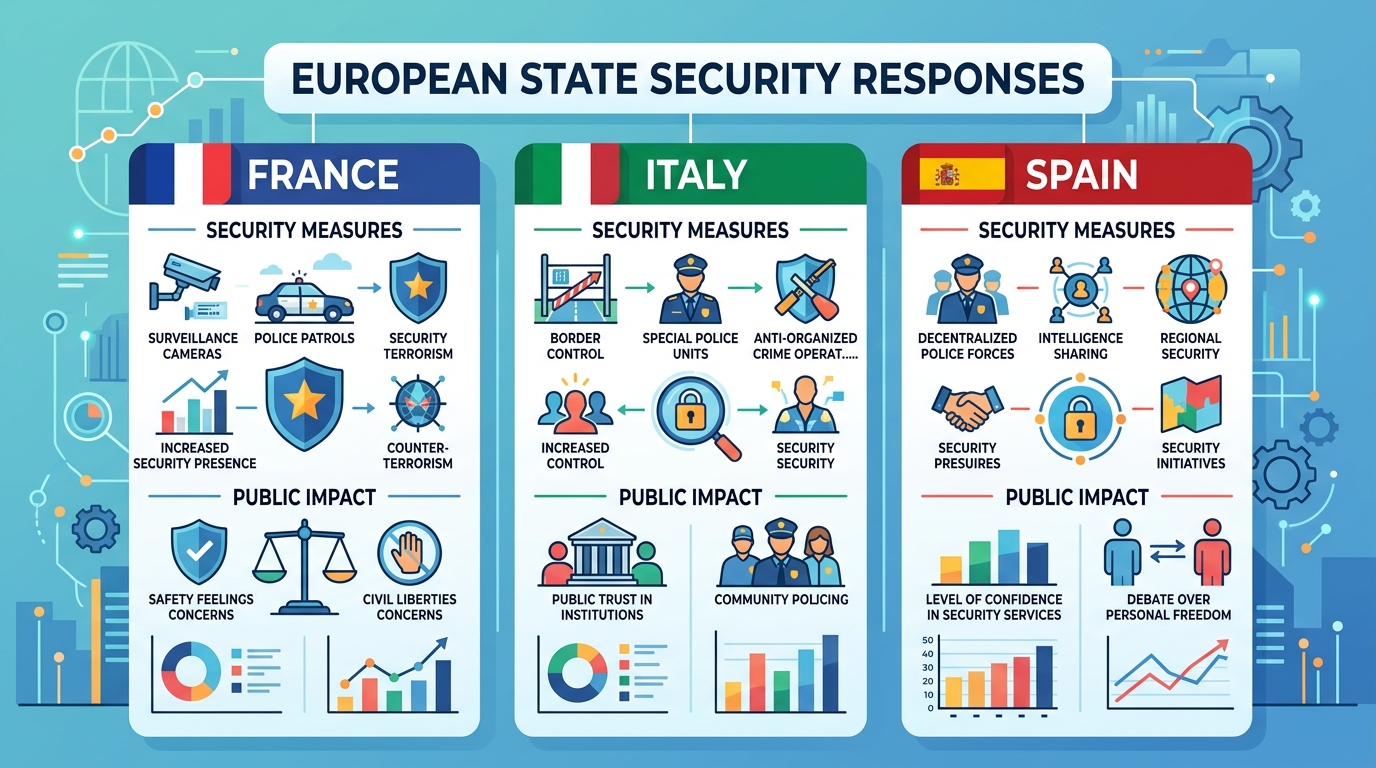
State Responses and Security Escalation
European governments have responded to the widespread unrest with high-visibility security crackdowns, leading to heightened political friction over the fundamental right to assembly.
In France, authorities deployed over 70,000 security personnel across major urban hubs like Paris and Lyon. Law enforcement established strict march rerouting to keep crowds away from central retail sectors and implemented fast-track judicial proceedings for those detained. This intense operational stance resulted in more than 2,700 total arrests over two weekends, alongside the heavy use of tear gas and water cannons to disperse crowds.
In Italy, the state mobilized 500 military personnel to reinforce state police forces in cities such as Milan and Turin, paired with pre-emptive measures including the physical boarding up of shopfronts. Security forces strictly broken up unauthorized gatherings, leading to hundreds of detentions and formal arrests.
In Spain, regional authorities heavily deployed the Mossos d'Esquadra across Barcelona, resorting to baton charges and water cannons to maintain control. The crackdown led to dozens of targeted arrests, whilst legal warnings were formally issued to the guardians of minors participating in the violent disruptions.
Analytical Takeaways: What This Signal Means for Europe
Crisis of Political Credibility: The unrest highlights a growing disconnect between European publics and incumbent governments across different political spectrums (from Macron’s centrist coalition in France to Meloni’s right-leaning administration in Italy and Sánchez’s left-wing government in Spain).
Economic Fragility as a Security Vector: Basic material pressures—specifically rent, energy, school infrastructure, and wage stagnation—are no longer contained within traditional political debate.When cost-of-living stresses remain unaddressed, routine civic protests quickly become vulnerable to violent disruption.
The Governance Dilemma: European capitals face a double-edged sword: reliant on aggressive policing to contain immediate property damage, heavy-handed tactics risk further alienating peaceful demonstrators and escalating long-term civil discontent.


