



The Price of Wellness: Navigating the Expense and Quality Divide in Philippine Healthcare
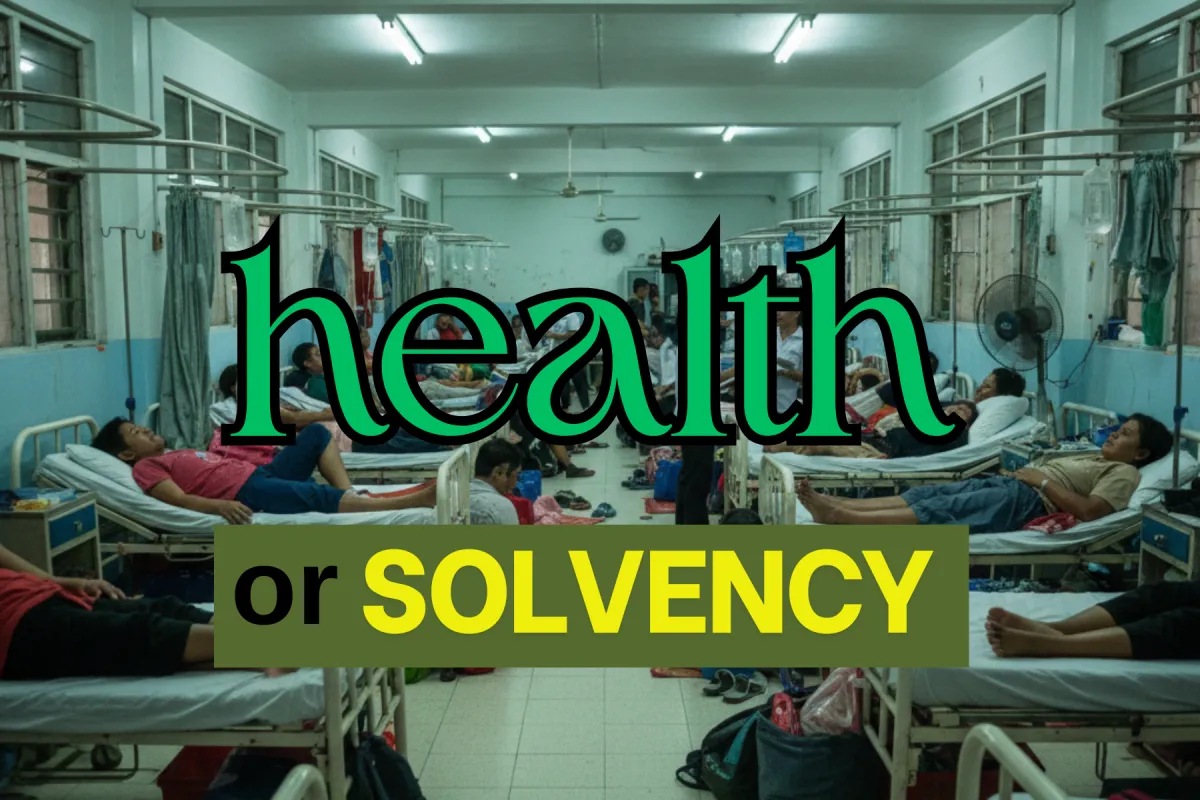
The Philippines, a nation celebrated for the compassion of its nurses and the skill of its surgeons, harbors a painful paradox at the heart of its healthcare system. On one side, gleaming private hospitals in Manila offer world-class, specialist care that attracts medical tourists from across the globe. On the other, overcrowded public wards in provincial centers symbolize the struggle of ordinary Filipinos who often face a devastating choice: health or solvency.
This dual reality defines Philippine healthcare.Despite the ambitious goal of the 2019 Universal Health Care (UHC) Act to guarantee equitable access to quality and affordable services, the system remains bifurcated—delivering high quality to the privileged few while leaving the vast majority exposed to financial catastrophe. The core issues are not a lack of talent or technology, but crippling expense and a widening gap in service quality that threatens to derail the country’s health goals.
The High Cost of Care: A Financial Catastrophe in Waiting
The most significant barrier to health for Filipinos is not the lack of facilities, but the cost. When illness strikes, especially catastrophic or chronic diseases, the nation's households are left scrambling, leading to massive personal debt and deepening cycles of poverty.
Out-of-Pocket Spending (OOP): The Heavy Burden on Households
In a well-funded health system, government insurance and subsidies should cover the bulk of medical costs. In the Philippines, however, financial risk is still shouldered largely by the citizens.
Data from the Philippine National Health Accounts (PHNA) paints a stark picture of this burden. In 2024, Filipino households' out-of-pocket expenses surged to ₱615.16 billion, an 11.8% increase from the previous year. This means that a staggering 42.7% of the country’s Current Health Expenditure (CHE) came directly from patients’ pockets, nearly matching the total contribution from government schemes and compulsory financing systems. To put this in perspective, the average health-related spending per Filipino reached approximately ₱12,000 in 2024, rising sharply from about ₱3,000 in 2000.
This reliance on direct payments at the point of care is universally recognized as a threat to equitable healthcare access. It places families, particularly those in low- and middle-income brackets, at constant risk of catastrophic health expenditure—defined as expenses exceeding 40% of their capacity to pay. In 2023 alone, an estimated 1.2 million households faced this situation, demonstrating that despite expanded government spending, the system is failing to provide meaningful financial protection.
PhilHealth's Promise and the Reality of "Balance Billing"
The National Health Insurance Program, administered by the Philippine Health Insurance Corporation (PhilHealth), is the primary mechanism intended to shield Filipinos from high costs. With over 95 million citizens enrolled, the system should be the anchor of financial protection.
However, PhilHealth's coverage often falls significantly short of the total hospital bill, particularly in private hospitals. This phenomenon, known as "balance billing," requires patients to personally pay the difference between the hospital’s total charge and the fixed amount reimbursed by PhilHealth. While the UHC Act introduced the No Balance Billing (NBB) policy for indigent and sponsored patients in government facilities, it does not fully apply to private hospitals or higher-tier services, frustrating patients who believed their insurance would cover them completely.
Furthermore, gaps in the system persist, as shown by the Philippine Institute for Development Studies (PIDS).They noted that around 33% of 2024 hospital admissions could have been avoided if patients had timely access to adequate primary healthcare. This inability to address illness early—often due to forgone or delayed care because of cost—funnels preventable cases into expensive, tertiary-level hospital care, unnecessarily inflating PhilHealth claims and household debt.PhilHealth has stated a goal to cut out-of-pocket medical expenses by up to 25% in three years, but experts argue this is impossible without a substantial, sustained increase in public health sector funding.
The Quality Divide: Public Wards vs. Private Suites
The issue of cost is inextricably linked to the issue of quality. The Philippines operates a two-tiered system where the quality of care is directly proportional to a patient's wealth, creating a massive disparity in health outcomes.
The A-List Medical Tourism and Private Sector Excellence
Private healthcare in the Philippines is often excellent. Hospitals in major urban centers boast specialized units, state-of-the-art equipment, and doctors trained in the world’s most prestigious institutions. This is the quality that attracts a flourishing medical tourism industry. For those who can afford it—the wealthy, the insured, and foreign patients—the care is comprehensive, immediate, and specialized. In these facilities, the doctor-to-patient ratio is manageable, wait times are minimal, and amenities are comparable to a five-star hotel.
The Public Sector Struggle: Overcrowding and Understaffing
The experience in the public sector is the complete opposite. Government hospitals, especially in Metro Manila and key regional cities, are chronically overburdened. They serve as the last resort for millions of low-income Filipinos, leading to severe overcrowding where patients are often forced to share beds or occupy makeshift cots in hallways.
Compounding this is a critical shortage of human resources.The Philippines has been a major exporter of medical professionals for decades—a phenomenon known as the "brain drain." While this provides foreign remittances, it hollows out the domestic system.
Doctor Shortage: The national average of physicians stands at roughly 7.92 doctors per 10,000 population (2022 data), falling significantly short of the World Health Organization’s (WHO) recommended ratio of 10 doctors per 10,000. In some regions, like the Bangsamoro Autonomous Region in Muslim Mindanao (BARMM), the ratio can drop to a critical 0.4 doctors per 10,000.
The Wait Time: One lawmaker predicted that due to the worsening brain drain, it could take up to 23 years to close the supply-to-demand gap for physicians.
Infrastructure Gaps: Outside of major cities, many public health facilities and rural health units (RHUs) suffer from outdated equipment, insufficient supplies, and poor maintenance.Geographic barriers and inadequate transportation networks in Geographically Isolated and Disadvantaged Areas (GIDAs) further prevent timely access to even basic care, forcing people to endure lengthy and often dangerous journeys for medical assistance.
This massive quality divide underscores a failure of equitable resource allocation, demonstrating that the health of a Filipino is often determined less by need and more by the zip code and the size of their wallet.
Workforce and Infrastructure Challenges: The Leaking Bucket
The disparities in cost and quality are rooted in systemic issues, primarily the bleeding of human resources and the uneven distribution of physical health infrastructure.
The Brain Drain Crisis
The Philippines is renowned as a global source of healthcare workers, particularly nurses, who are highly sought after in developed countries for their competence and work ethic. While this is a source of national pride, the reality is that the country is grappling with an existential "brain drain" crisis.
The motivation for migration is primarily economic. A nurse or doctor working in the public sector in the Philippines earns a fraction of the salary they could command in the United States, Canada, the United Kingdom, or the Middle East. Data reveals the severity of the loss: out of approximately 951,105 registered nurses (RNs) in the country, only about 53.5% are currently active. The remainder have either migrated, retired, or left the profession due to poor working conditions and inadequate pay in local hospitals.
This migration creates a severe shortage that directly impacts service quality for those who remain. Public hospitals run on skeletal staffing, forcing remaining personnel to work excessive hours, which leads to burnout, lower morale, and potential compromises in patient care.The doctor-to-patient ratio is particularly alarming, with only about 5 doctors per 10,000 population nationwide—half the WHO recommendation—and conditions being significantly worse in the provinces. This imbalance means doctors have less time for preventative and holistic care, defaulting to rushed diagnoses and treatment of acute conditions.
Geographic and Primary Care Access
Beyond the urban centers, access to any form of quality healthcare rapidly deteriorates.The government’s Primary Care System, meant to be the first line of defense against illness, is predominantly run by Local Government Units (LGUs) and often suffers from fragmented governance and insufficient funding.
Many citizens bypass this system entirely, choosing to go directly to overcrowded emergency rooms for common ailments, contributing to the hospital backlog. Furthermore, geographically isolated and disadvantaged areas (GIDAs) often have rudimentary barangay health centers that may be visited by a physician only once or twice a month, forcing residents to rely on community health volunteers (Barangay Health Workers) for basic monitoring and referral.When a true medical emergency occurs, the lack of paved roads, poor transportation networks, and long distances can turn a treatable condition into a tragedy. The result is a system that is reactive, expensive, and fundamentally inequitable based on where a citizen lives.
The Universal Health Care Act: A Distant Promise
In 2019, the passage of Republic Act No. 11223, or the Universal Health Care (UHC) Act, was hailed as a landmark legislative achievement designed to fix the structural flaws of the system.Its core promise is that all Filipinos are guaranteed equitable access to a comprehensive set of quality and cost-effective health services without causing financial hardship.
UHC’s Lofty Goals and Practical Roadblocks
The UHC Act aims to reorganize the entire health system into integrated province-wide and city-wide health systems, emphasizing a shift from a hospital-centric model to a stronger primary care network. Key reforms include:
Population-based Services: Focusing on public health measures like immunization and disease surveillance.
Individual-based Services: Comprehensive outpatient care through the "Konsulta" package, which aims to cover basic laboratory tests, check-ups, and medicines through a designated primary care provider.
Financial Integration: The consolidation of health funds to ensure strategic investment.
However, over six years after its enactment, the implementation of UHC has been slow, disjointed, and hampered by structural issues.
Funding Gaps: Despite the mandate, health sector budgeting remains constrained.For UHC to truly eliminate OOP expenses, public health spending needs to significantly increase.The Philippines spends only around 44% on public health, far below the 60% average for upper middle-income countries it aspires to join. Without adequate, sustained funding, expanded PhilHealth benefits and new primary care centers cannot be supported.
Lack of Awareness and Utilization: A survey revealed that only 24.1% of Filipinos in active UHC implementation sites are fully aware of the law, and even fewer are aware of the Konsulta program. Consequently, many still bypass the primary care system, defeating the core purpose of UHC.
Inefficient Processes: PhilHealth processes for claims, registration, and capitation payments to facilities remain slow and inefficient, leading to provider reluctance and a lack of trust in the system's ability to deliver.
The slow rollout of UHC means that the high cost and unequal quality that the law was designed to eradicate remain the dominant features of Philippine healthcare today.
Conclusion: Investing in Health is Investing in the Nation
The Philippine healthcare saga is one of potential marred by inequity. The country possesses the talent to provide exceptional care, yet the system actively pushes its most valuable human resources abroad while simultaneously imposing an unsustainable financial burden on its most vulnerable citizens.
Moving forward, the nation must realize that health is not a commodity, but a national investment. Closing the gap between the ₱615 billion paid directly by desperate households and the financial protection promised by the State requires more than mere policy tweaks. It demands a deliberate, massive increase in government health allocation, rigorous PhilHealth reforms to end balance billing for basic care, and a robust strategy—including higher salaries and better benefits—to incentivize thousands of Filipino medical professionals to stay and serve their own communities.
Only when quality healthcare becomes a right guaranteed by the State, and not a luxury purchased with a family’s savings or debt, can the Philippines truly claim to be a nation on the path to genuine health and prosperity.


